

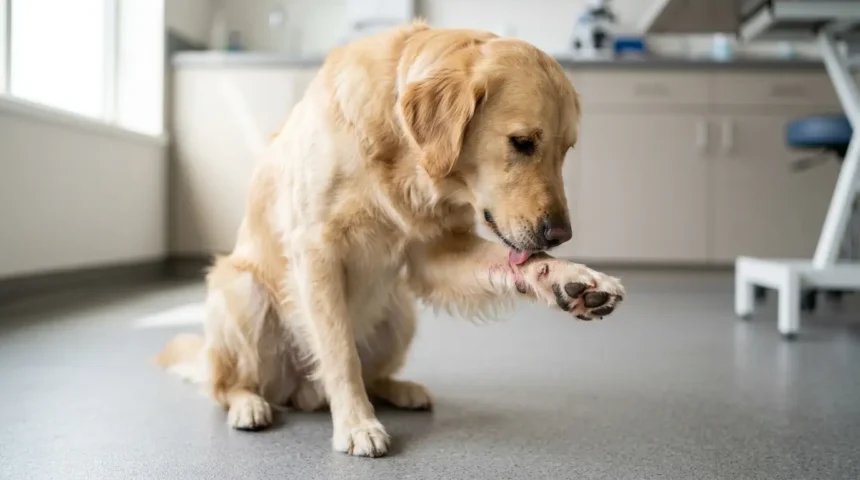
If your dog occasionally licks their paws, there may be nothing to worry about. Dogs naturally lick their feet while grooming themselves, cleaning off dirt, or responding to minor irritation.
But frequent or persistent paw licking is different. If your dog repeatedly licks, chews, or bites their paws, especially if the skin is red, swollen, smelly, or sore, the behavior may be a sign of an underlying problem.
So, why do dogs lick their paws so much?
Common causes include allergies, skin irritation, yeast or bacterial overgrowth, injuries, foreign objects, parasites, dry or damaged paw pads, and sometimes pain or behavioral problems. The pattern of licking can provide useful clues, but it cannot replace a veterinary examination.
This guide explains the most common reasons dogs lick their paws, what you can safely check at home, when to contact a veterinarian, and how excessive licking is diagnosed and treated.
Is It Normal for Dogs to Lick Their Paws?
Yes. Occasional paw licking is normal dog behavior.
Your dog may lick their paws:
- After coming inside from a walk
- While grooming
- After eating
- To remove dirt or debris
- Briefly before settling down to sleep
- After mild irritation
The important factor is how often your dog does it and whether anything else has changed.
Signs of normal paw licking
Occasional licking without redness, swelling, pain, odor, or hair loss is generally less concerning.
Signs that paw licking may be a problem
Pay closer attention if your dog:
- Licks the same paw repeatedly
- Chews between the toes
- Licks several paws every day
- Has red or swollen skin
- Develops a noticeable odor
- Has brown or rust-colored staining around the toes
- Develops sores or hair loss
- Limping or avoiding weight on a paw
- Becomes uncomfortable when the paw is touched
Repeated licking can create an itch-lick cycle. Licking may temporarily soothe irritation, but continued moisture and mechanical irritation can damage the skin and make the original problem worse.
One Paw or All Four? Why the Pattern Matters
The number of paws involved can provide a useful clue.
Your dog suddenly starts licking one paw
A problem affecting only one paw may be associated with a localized issue such as:
- A thorn or other foreign object
- Torn nail
- Small cut
- Paw-pad injury
- Insect sting
- Burn or irritation
- Local infection
A sudden change in behavior deserves a careful inspection of the affected paw.
Your dog repeatedly licks several paws
When multiple paws are affected, an underlying skin problem becomes more likely. Allergic skin disease, environmental irritation, and secondary infections can cause itching across several feet.
However, the pattern alone cannot diagnose the cause.
1. Allergies and Itchy Skin
Allergies are a common reason dogs develop itchy skin and paws.
Environmental allergens may include:
- Pollen
- Grass
- Mold
- Dust mites
- Other environmental substances
Dogs with allergic skin disease may lick or chew their paws because the skin feels itchy or irritated.
You may also notice:
- Itchy ears
- Face rubbing
- Red skin
- Repeated scratching
- Hair loss from excessive scratching or licking
- Recurrent skin or ear problems
- Symptoms that become worse during certain seasons
What about food allergies?
Food allergies can occur, but paw licking does not automatically mean that your dog’s food is the problem.
A dog with a suspected food allergy may have itching or recurrent skin problems, but the diagnosis generally requires a properly managed elimination diet trial under veterinary guidance rather than simply changing foods randomly.
If you suspect your dog’s diet is contributing to their itching, speak with your veterinarian before making repeated diet changes.
2. Yeast or Bacterial Overgrowth
Yeast and bacteria can sometimes overgrow on already irritated skin.
This may happen when the skin barrier has been damaged by allergies, moisture, licking, or another underlying condition.
Possible signs include:
- Redness between the toes
- Persistent itching
- Greasy or irritated skin
- Hair or skin discoloration
- A noticeable odor
- Repeated licking or chewing
A “corn chip” or unusual odor can occur with certain skin problems, but smell alone cannot confirm a yeast infection.
A veterinarian may examine the affected skin and perform cytology or other tests when appropriate to determine whether yeast, bacteria, or another problem is present.
Why treating only the licking may not be enough
If an infection or underlying allergy is responsible, simply stopping the licking does not address the original cause.
The goal is to identify and treat the underlying problem while protecting the skin from further damage.
3. Injury, Torn Nail, or Foreign Object
A sudden increase in licking of one paw should prompt you to check for an injury.
Look carefully at:
- The paw pads
- Between the toes
- Around the nails
- The skin on top of the paw
Possible causes include:
- Thorn
- Small piece of glass or other debris
- Grass awn or similar plant material
- Torn nail
- Small cut
- Insect sting
- Paw-pad burn
- Abrasion
Signs of a possible paw injury
Your dog may:
- Suddenly start licking one paw
- Limp
- Hold the paw up
- Pull away when you touch it
- Have swelling
- Have bleeding
- Show obvious discomfort
Do not dig deeply into the paw to remove an object that is embedded. A veterinarian should handle foreign material that cannot be safely removed without causing additional injury.
4. Hot Surfaces and Damaged Paw Pads
Paw pads are tough, but they are not immune to injury.
Hot pavement, rough surfaces, ice, snow, or other environmental conditions can irritate or damage the pads.
Signs of damaged paw pads
Look for:
- Cracks
- Peeling
- Redness
- Raw areas
- Sensitivity
- Excessive licking after outdoor activity
During very hot weather, avoid prolonged walks on surfaces that are hot enough to burn your hand. When conditions are extreme, choose cooler walking times and safer surfaces.
If the paw pads are visibly burned, raw, or painful, contact your veterinarian rather than relying on home treatment.
5. Fleas and Other Parasites
Parasites can cause significant itching.
Flea bites, for example, can trigger intense skin irritation in some dogs. A dog may scratch, chew, or lick areas that feel itchy, including the paws.
Other signs can include:
- Scratching
- Hair loss
- Small scabs
- Skin irritation
- Biting at the skin
- Increased grooming
Even dogs that spend most of their time indoors can be exposed to fleas.
Keeping your dog’s parasite prevention up to date is an important part of routine health care. Ask your veterinarian which product and schedule are appropriate for your dog.
6. Anxiety, Boredom, or Repetitive Behavior
Not every case of paw licking is caused by an obvious skin problem.
Some dogs may develop repetitive licking or grooming behaviors in response to stress, boredom, changes in routine, or anxiety.
Possible clues include:
- Licking primarily when left alone
- Increased pacing
- Destructive behavior
- Other repetitive behaviors
- Excessive grooming
However, behavioral causes should not be assumed before physical causes have been considered.
An itchy or painful paw can also lead to repetitive licking.
If your dog’s paws look normal but the licking is persistent, your veterinarian can help determine whether a medical or behavioral problem needs to be investigated.
7. Pain or Joint Problems
Dogs do not always show pain in obvious ways.
A dog may lick an area that feels uncomfortable, particularly if the discomfort involves a paw, toe, or joint.
Older dogs may be more likely to experience conditions such as arthritis, but joint and musculoskeletal problems can occur in dogs of different ages.
Other signs of pain may include:
- Limping
- Stiffness
- Difficulty getting up
- Reluctance to climb stairs
- Reduced activity
- Changes in gait
- Sensitivity when touched
If paw licking occurs together with limping or a noticeable change in movement, veterinary evaluation is appropriate.
When Should You Worry About Your Dog Licking Their Paws?
Occasional licking is usually less concerning. Persistent licking deserves more attention, particularly when other symptoms are present.
Contact your veterinarian if you notice:
- Persistent or worsening paw licking
- Red or swollen skin
- Bleeding
- Pus or other discharge
- Open sores
- Significant odor
- Hair loss
- Severe itching
- A broken or damaged nail
- Limping
- Pain when the paw is touched
- A foreign object that cannot be safely removed
- Skin changes that are spreading
Seek prompt veterinary attention if your dog has significant pain, cannot put weight on the limb, has a deep wound, or has a rapidly worsening swelling or infection.
How Veterinarians Diagnose Excessive Paw Licking
Paw licking is a symptom rather than a diagnosis. Finding the underlying cause usually starts with a physical examination and a detailed history.
Your veterinarian may ask:
- When did the licking start?
- Is one paw affected or several?
- Does it happen after walks?
- Is your dog itchy elsewhere?
- Has your dog’s diet changed?
- Is flea and parasite prevention being used?
- Have you noticed ear problems?
- Is the problem seasonal?
- Have you already tried any treatments?
The physical examination
Your veterinarian may examine:
- Paw pads
- Skin between the toes
- Nails
- Skin around the paws
- Other areas of the body
- Ears and skin for signs of allergic disease
- Joints and limbs when pain is suspected
Additional testing
Depending on what the examination shows, your veterinarian may recommend tests such as:
- Skin cytology
- Skin scraping
- Other skin tests
- Bacterial or fungal testing when indicated
- A carefully controlled elimination diet trial when food allergy is suspected
Not every dog needs every test. Testing should be based on the dog’s history and physical findings.
How to Stop a Dog From Licking Their Paws
The best way to stop persistent paw licking is to address why the dog is licking in the first place.
Start with basic paw care
After walks:
- Check the paws.
- Look between the toes.
- Look for obvious dirt or debris.
- Rinse away irritants when appropriate.
- Dry the paws thoroughly.
Regularly check the nails and paw pads for changes.
Keep parasite prevention current
Use veterinarian-recommended flea and parasite prevention consistently.
Avoid known irritants
If you notice that licking becomes worse after walking in a particular area, discuss the pattern with your veterinarian and consider avoiding that environment until the cause is understood.
Prevent further damage
If your dog is damaging the skin through constant licking, a veterinarian may recommend temporary protective measures such as an Elizabethan collar or another appropriate barrier.
Do not simply cover an infected or injured paw without addressing the underlying problem.
What Can You Safely Do at Home?
For mild irritation without an obvious wound, simple paw care may help.
You can:
- Gently rinse the paws with clean water
- Dry them thoroughly
- Keep the nails appropriately trimmed
- Inspect between the toes regularly
- Use a veterinarian-approved paw product when appropriate
These measures are supportive care. They do not treat underlying allergies, infections, parasites, significant injuries, or other medical conditions.
Avoid putting these on irritated paws unless your veterinarian specifically recommends them:
- Essential oils
- Hydrogen peroxide
- Strong disinfectants
- Human skin creams
- Random antifungal or antibiotic products
- Household chemicals
Dogs lick their paws, so anything applied to the skin may be swallowed.
Common Mistakes Dog Owners Make
Mistake 1: Assuming every case is an allergy
Allergies are common, but injuries, infections, parasites, and other conditions can cause similar symptoms.
Mistake 2: Treating the symptom instead of the cause
Stopping licking temporarily does not solve an underlying infection, allergy, foreign body, or painful condition.
Mistake 3: Ignoring one-paw licking
Sudden licking of one paw can be a clue to a localized injury or foreign object.
Mistake 4: Using human products
Some human creams and household products are not appropriate for dogs and may cause irritation or problems if swallowed.
Mistake 5: Waiting when the paw is clearly painful
Limping, swelling, bleeding, open wounds, or severe pain warrant veterinary attention.
Can Paw Licking Cause More Problems?
Yes. Persistent licking can damage the skin.
The repeated moisture and friction can contribute to:
- More inflammation
- Skin irritation
- Hair loss
- Secondary infection
- Thickened skin
- Chronic sores
This is why treating the underlying cause is more important than simply trying to stop the behavior.
Why Does My Dog Lick Their Paws More at Night?
Some dogs may lick their paws more at night because there are fewer distractions when they are resting.
However, nighttime licking does not automatically mean that your dog is anxious.
Allergies, skin irritation, infection, pain, or other medical problems can also cause licking at night. If the behavior is frequent or worsening, your veterinarian can help identify the cause.
Can Grass Cause Dogs to Lick Their Paws?
Grass can be associated with paw irritation in some dogs.
The problem may involve environmental allergens or irritants that contact the paws while walking outdoors.
If your dog repeatedly starts licking their paws after walks, clean and dry the paws and monitor the pattern. If the problem continues, discuss it with your veterinarian rather than assuming that grass is definitely the cause.
Should I Stop My Dog From Licking Their Paws?
Occasional licking is normal and does not necessarily need to be stopped.
The concern is persistent licking that causes or accompanies skin damage.
If your dog is repeatedly licking, chewing, or biting the paws, focus on identifying the reason for the behavior rather than simply preventing the licking.
Can I Treat Paw Licking at Home?
Mild irritation may improve with gentle cleaning and keeping the paws dry.
However, home care is not enough for every case.
If there is redness, swelling, odor, discharge, bleeding, limping, significant itching, or persistent licking, your dog should be evaluated by a veterinarian.
When Should I Take My Dog to the Vet for Paw Licking?
Arrange a veterinary examination when paw licking is persistent, recurrent, or accompanied by other symptoms.
A veterinary visit is particularly important when your dog has:
- Pain
- Limping
- Swelling
- Bleeding
- Open sores
- Pus or discharge
- Severe redness
- Persistent odor
- Significant hair loss
- A suspected foreign object
Final Thoughts: Why Do Dogs Lick Their Paws?
So, why do dogs lick their paws?
Sometimes it is simply grooming. But frequent paw licking can also be your dog’s way of responding to itching, irritation, pain, allergies, infection, parasites, or another underlying problem.
Pay attention to the pattern:
- One paw suddenly: check for injury, a foreign object, or nail problems.
- Several paws repeatedly: an underlying skin or allergy problem may be involved.
- Redness or odor: infection or inflammation may need evaluation.
- Limping or pain: your dog should be examined.
- Mild irritation: gentle cleaning and keeping the paws dry may help while you monitor the situation.
Most importantly, don’t assume that excessive paw licking is simply a habit. When the behavior is persistent or accompanied by changes in the skin or movement, finding the underlying cause is the key to helping your dog feel comfortable again.