
Choosing the right dog breed is one of the most important decisions any pet owner will make. With over 340 recognized dog breeds worldwide and countless mixed breeds, understanding the different types of dogs can feel overwhelming. Whether you’re a first-time dog owner or an experienced handler looking to add a new furry friend to your family, this comprehensive guide will help you navigate the diverse world of dog breeds, their characteristics, temperaments, and care requirements.
Understanding Dog Breed Classifications
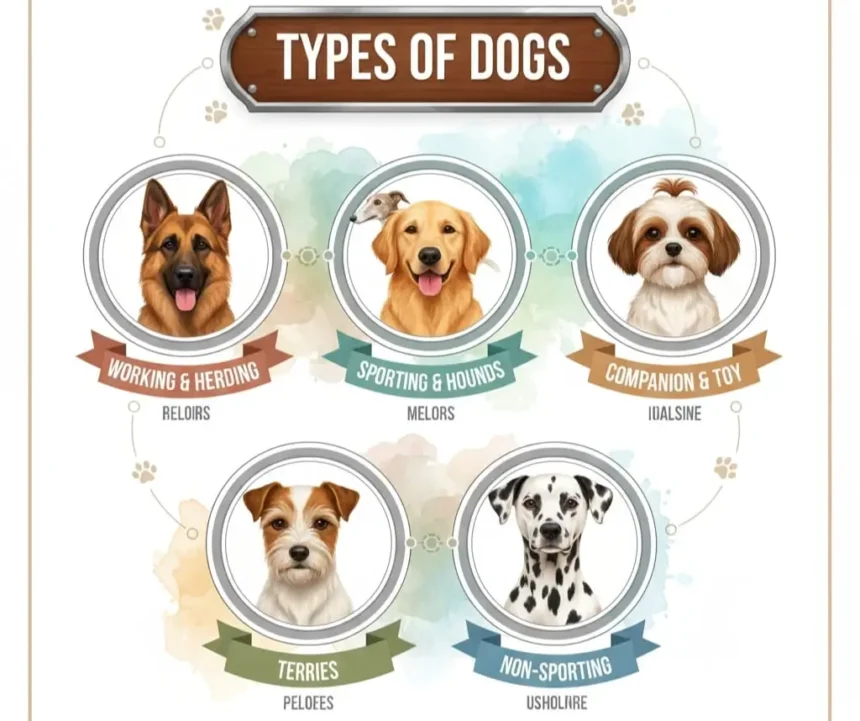
The Seven Major Dog Groups
Professional kennel clubs, including the American Kennel Club (AKC) and the Fédération Cynologique Internationale (FCI), classify dogs into distinct groups based on their original purpose and characteristics. Understanding these groups helps potential owners identify which types of dogs align with their lifestyle.
1. Sporting Dogs
Sporting dogs were originally bred to assist hunters in finding, flushing, and retrieving game birds. These active, alert dogs make excellent family companions for people with active lifestyles.
Popular Sporting Dog Breeds:
- Labrador Retriever: America’s most popular dog breed, known for their friendly nature, intelligence, and versatility
- Golden Retriever: Gentle, loyal, and patient family dogs with beautiful golden coats
- English Springer Spaniel: Energetic hunting companions with excellent stamina
- Cocker Spaniel: Smaller sporting dogs with sweet temperaments
- Vizsla: Athletic Hungarian hunting dogs requiring extensive exercise
Characteristics of Sporting Dogs:
- High energy levels requiring daily exercise
- Intelligent and highly trainable
- Friendly, outgoing personalities
- Strong prey drive and excellent sense of smell
- Often love water and swimming
- Require mental stimulation to prevent boredom
Best For: Active families, outdoor enthusiasts, runners, and those who can provide at least 1-2 hours of daily exercise.
2. Hound Dogs
Hound breeds were developed for hunting and tracking game through scent or sight. This diverse group includes both scent hounds and sight hounds, each with unique hunting styles.
Scent Hounds:
- Beagle: Small, friendly hounds perfect for families
- Bloodhound: Incredible tracking abilities with droopy, lovable faces
- Basset Hound: Low-slung hounds with exceptional noses
- Coonhound varieties: American hunting specialists
Sight Hounds:
- Greyhound: Fastest dog breed, reaching speeds up to 45 mph
- Whippet: Smaller, gentler version of Greyhounds
- Afghan Hound: Elegant dogs with flowing coats
- Saluki: Ancient breed known for grace and speed
Characteristics of Hound Dogs:
- Independent thinkers, sometimes stubborn
- Strong hunting instincts
- Vocal breeds (especially scent hounds)
- Varying energy levels depending on type
- Excellent endurance
Best For: Patient owners who appreciate independent dogs, those with secure yards, and people seeking loyal companions.
3. Working Dogs
Working dog breeds were developed to perform jobs such as guarding property, pulling sleds, and performing water rescues. These powerful, intelligent dogs require experienced handlers.
Popular Working Dog Breeds:
- German Shepherd: Versatile working dogs used in police, military, and service work
- Rottweiler: Confident guardian dogs with strong protective instincts
- Boxer: Energetic, playful dogs with strong guarding abilities
- Doberman Pinscher: Alert, loyal protectors with athletic builds
- Great Dane: Gentle giants despite their imposing size
- Siberian Husky: Energetic sled dogs with striking appearances
- Saint Bernard: Massive rescue dogs with patient temperaments
- Bernese Mountain Dog: Large, gentle Swiss working dogs
Characteristics of Working Dogs:
- Large to giant size in most breeds
- High intelligence and trainability
- Strong work ethic and need for purpose
- Protective instincts
- Require consistent training and socialization
- Significant exercise needs
Best For: Experienced dog owners, those with large homes and yards, people seeking protection dogs, or those interested in dog sports and training.
4. Terrier Dogs
Terriers were bred to hunt and kill vermin. These feisty, energetic dogs pack big personalities into small to medium-sized bodies.
Popular Terrier Breeds:
- Bull Terrier: Muscular dogs with distinctive egg-shaped heads
- Jack Russell Terrier: High-energy small dogs with endless enthusiasm
- Scottish Terrier: Dignified, independent terriers with distinctive profiles
- West Highland White Terrier: Cheerful, confident white terriers
- Airedale Terrier: The “King of Terriers,” largest in the group
- Yorkshire Terrier: Tiny dogs with big personalities
- Staffordshire Bull Terrier: Muscular, affectionate family dogs
Characteristics of Terrier Dogs:
- Feisty, energetic personalities
- High prey drive
- Stubborn and independent
- Vocal and alert
- Require mental stimulation
- Often don’t back down from challenges
Best For: Active individuals or families, experienced dog handlers, and those who appreciate spirited, confident dogs.
5. Toy Dogs
Toy breeds were developed primarily as companion animals. These small dogs are perfect for apartment living and those seeking lap dogs.
Popular Toy Dog Breeds:
- Chihuahua: Tiny dogs with huge personalities
- Pomeranian: Fluffy, fox-like companion dogs
- Maltese: Pure white lap dogs with silky coats
- Pug: Charming dogs with wrinkled faces
- Shih Tzu: Ancient Chinese companion breeds
- Cavalier King Charles Spaniel: Gentle, affectionate toy spaniels
- Yorkshire Terrier: Confident terriers in toy-sized packages
Characteristics of Toy Dogs:
- Small size (typically under 15 pounds)
- Bred specifically for companionship
- Often adaptable to various living situations
- May be fragile and require careful handling
- Can be prone to “small dog syndrome” without proper training
- Lower exercise requirements than larger breeds
Best For: Apartment dwellers, seniors, individuals seeking devoted companions, and those with limited space.
6. Non-Sporting Dogs
The non-sporting group is diverse, containing breeds that don’t fit neatly into other categories. These dogs vary greatly in size, appearance, and temperament.
Popular Non-Sporting Breeds:
- Bulldog: Gentle, dignified companions with distinctive appearances
- Poodle (Standard and Miniature): Highly intelligent, hypoallergenic dogs
- Dalmatian: Spotted dogs known for their association with firehouses
- Boston Terrier: “American Gentlemen” with tuxedo markings
- French Bulldog: Compact, muscular companion dogs with bat ears
- Bichon Frise: Cheerful, fluffy white dogs
- Chow Chow: Independent dogs with lion-like manes
Characteristics of Non-Sporting Dogs:
- Extremely varied in size and appearance
- Different temperaments and exercise needs
- Many make excellent family companions
- Range from low to high energy levels
Best For: Various lifestyles depending on the specific breed chosen.
7. Herding Dogs
Herding breeds were developed to control the movement of livestock. These intelligent, trainable dogs excel at dog sports and need mental challenges.
Popular Herding Dog Breeds:
- Border Collie: The most intelligent dog breed, exceptional herding dogs
- Australian Shepherd: Energetic, versatile working dogs
- German Shepherd: Versatile breed used in various working roles
- Shetland Sheepdog: Smaller herding dogs with beautiful coats
- Welsh Corgi (Pembroke and Cardigan): Low-slung herding dogs with big personalities
- Australian Cattle Dog: Tough, energetic working dogs
- Belgian Malinois: Athletic dogs used in police and military work
Characteristics of Herding Dogs:
- Extremely intelligent and trainable
- High energy requiring extensive exercise
- Strong herding instincts (may nip at heels)
- Need mental stimulation and jobs to do
- Loyal and devoted to families
- Excel in dog sports and obedience
Best For: Active families, experienced trainers, those interested in dog sports, and people who can provide both physical and mental exercise.
Types of Dogs by Size
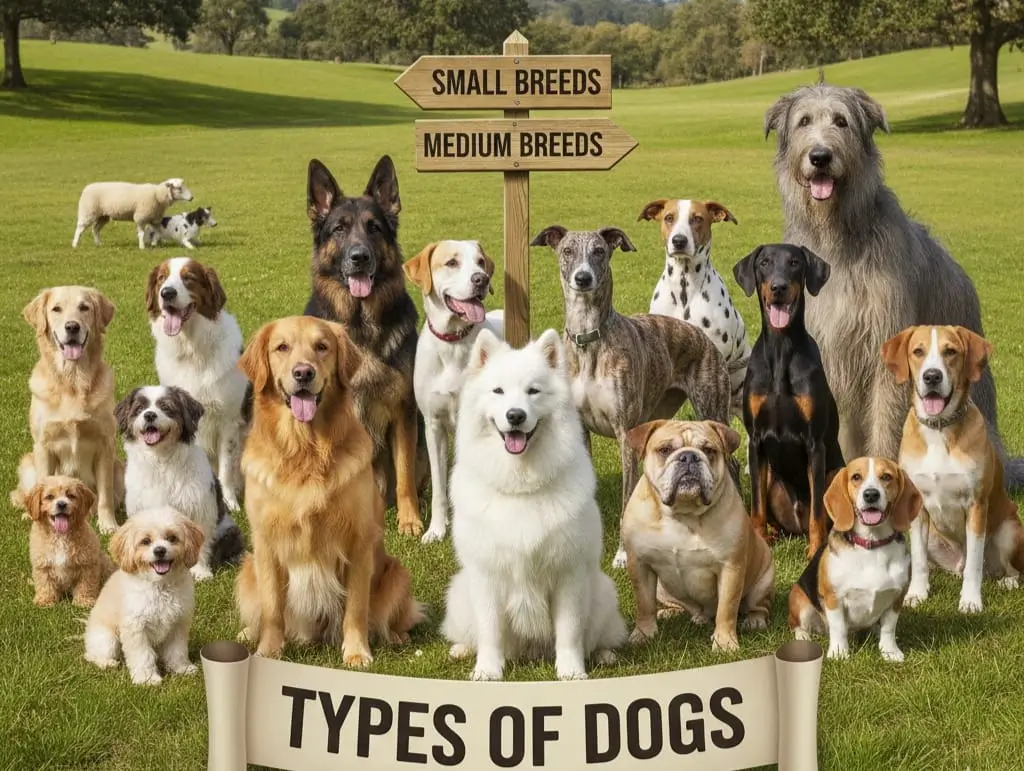
Small Dog Breeds (Under 25 pounds)
Small dogs are ideal for apartment living and those with limited space. Popular small breeds include:
- Chihuahua (3-6 pounds): Loyal, bold companions
- Yorkshire Terrier (4-7 pounds): Confident, affectionate terriers
- Pomeranian (3-7 pounds): Fluffy, alert companion dogs
- Dachshund (16-32 pounds for standard): Long-bodied hounds
- Shih Tzu (9-16 pounds): Friendly lap dogs
- Miniature Schnauzer (11-20 pounds): Alert, spirited terriers
- Boston Terrier (12-25 pounds): Friendly “American Gentlemen”
Advantages of Small Dogs:
- Lower food and medication costs
- Easier to transport
- Longer lifespans (typically 12-16 years)
- Suitable for apartments and small homes
- Easier to manage physically
Considerations:
- May be more fragile
- Can develop “small dog syndrome” without training
- May be harder to housebreak
- Can be more prone to separation anxiety
Medium Dog Breeds (25-50 pounds)
Medium-sized dogs offer a balance between small and large breeds. Popular medium breeds include:
- Cocker Spaniel (20-30 pounds): Gentle, happy sporting dogs
- Beagle (20-30 pounds): Friendly, curious hounds
- Border Collie (30-45 pounds): Highly intelligent herding dogs
- Australian Shepherd (40-65 pounds): Energetic, versatile dogs
- Bulldog (40-50 pounds): Gentle, dignified companions
- English Springer Spaniel (40-50 pounds): Friendly sporting dogs
Advantages of Medium Dogs:
- Versatile for various activities
- Suitable for many living situations
- Generally robust and healthy
- Good balance of exercise needs
Large Dog Breeds (50-100 pounds)
Large dogs require more space and resources but offer impressive presence and capabilities. Popular large breeds include:
- Labrador Retriever (55-80 pounds): Friendly, versatile family dogs
- Golden Retriever (55-75 pounds): Gentle, loyal companions
- German Shepherd (50-90 pounds): Intelligent working dogs
- Boxer (50-80 pounds): Energetic, playful guardians
- Doberman Pinscher (60-100 pounds): Alert, loyal protectors
- Rottweiler (80-135 pounds): Confident guardian dogs
Advantages of Large Dogs:
- Often calmer indoors
- Excellent for outdoor activities
- Strong protection capabilities
- Often good with children
Considerations:
- Higher costs (food, vet care, supplies)
- Shorter lifespans (8-12 years typically)
- Require more space
- Can be challenging to control without training
Giant Dog Breeds (Over 100 pounds)
Giant breeds are impressive but require significant commitment. Popular giant breeds include:
- Great Dane (110-175 pounds): Gentle giants with noble bearing
- Saint Bernard (120-180 pounds): Patient rescue dogs
- Mastiff (120-230 pounds): Massive, protective guardians
- Newfoundland (100-150 pounds): Sweet-natured water rescue dogs
- Irish Wolfhound (105-120 pounds): Gentle, ancient sighthounds
Special Considerations for Giant Breeds:
- Very expensive to maintain
- Shorter lifespans (6-10 years)
- Prone to joint problems and bloat
- Require careful growth management as puppies
- Need significant space
Types of Dogs by Coat Type
Short-Haired Dog Breeds
Low-maintenance coats requiring minimal grooming:
- Labrador Retriever
- Boxer
- Doberman Pinscher
- Beagle
- Bulldog
- Vizsla
- Weimaraner
Grooming Needs: Weekly brushing, occasional baths
Medium-Haired Dog Breeds
Moderate grooming requirements:
- German Shepherd
- Golden Retriever
- Australian Shepherd
- Border Collie
- Siberian Husky
Grooming Needs: 2-3 times weekly brushing, regular baths, seasonal shedding management
Long-Haired Dog Breeds
High-maintenance coats requiring regular grooming:
- Afghan Hound
- Yorkshire Terrier
- Maltese
- Shih Tzu
- Old English Sheepdog
- Lhasa Apso
Grooming Needs: Daily brushing, regular professional grooming, frequent baths
Hypoallergenic Dog Breeds

While no dog is 100% hypoallergenic, these breeds produce fewer allergens:
- Poodle (all sizes)
- Bichon Frise
- Maltese
- Portuguese Water Dog
- Soft Coated Wheaten Terrier
- Schnauzer (all sizes)
- Yorkshire Terrier
Types of Dogs by Temperament
Best Family Dogs
Ideal breeds for households with children:
- Labrador Retriever: Patient, gentle, playful
- Golden Retriever: Tolerant, loving, reliable
- Beagle: Friendly, gentle, curious
- Bulldog: Gentle, patient, protective
- Pug: Playful, loving, social
- Irish Setter: Energetic, affectionate, patient
- Collie: Gentle, predictable, easy to train
Best Guard Dogs
Protective breeds for home security:
- German Shepherd: Intelligent, trainable, courageous
- Rottweiler: Confident, fearless, loyal
- Doberman Pinscher: Alert, loyal, fearless
- Bullmastiff: Powerful, protective, docile with family
- Giant Schnauzer: Powerful, intelligent, loyal
Best Apartment Dogs
Breeds suitable for small living spaces:
- French Bulldog: Quiet, low-energy, adaptable
- Cavalier King Charles Spaniel: Gentle, adaptable, quiet
- Pug: Compact, low-exercise needs, friendly
- Bichon Frise: Small, friendly, minimal shedding
- Boston Terrier: Compact, friendly, low-maintenance
Best Dogs for First-Time Owners
Easy-going breeds for beginners:
- Labrador Retriever: Eager to please, trainable, forgiving
- Golden Retriever: Patient, gentle, trainable
- Cavalier King Charles Spaniel: Affectionate, adaptable, gentle
- Pug: Low-maintenance, friendly, adaptable
- Papillon: Smart, trainable, friendly
Mixed Breed Dogs vs. Purebred Dogs
Benefits of Mixed Breed Dogs
Mixed breed dogs (also called mutts or crossbreeds) offer unique advantages:
Health Advantages:
- Hybrid vigor: Often healthier due to diverse genetics
- Lower incidence of inherited diseases
- Potentially longer lifespans
- More genetic diversity
Cost and Availability:
- Lower adoption fees
- Readily available in shelters
- Often already spayed/neutered and vaccinated
- Unique, one-of-a-kind appearances
Temperament:
- Often blend the best traits of multiple breeds
- Can be surprisingly predictable in adult dogs
- Generally adaptable and resilient
Benefits of Purebred Dogs
Purebred dogs offer predictability and specific traits:
Predictability:
- Known size, appearance, and coat type
- Predictable temperament and behavior patterns
- Specific energy levels and exercise needs
- Documented health history and testing
Purpose-Bred Traits:
- Specific working abilities
- Breed-specific talents and instincts
- Participation in breed-specific competitions
- Preservation of breed standards
Popular Designer Dog Breeds
Designer dogs (intentional crosses) have gained popularity:
- Labradoodle (Labrador + Poodle): Low-shedding, friendly companions
- Goldendoodle (Golden Retriever + Poodle): Gentle, intelligent family dogs
- Cockapoo (Cocker Spaniel + Poodle): Affectionate, hypoallergenic
- Puggle (Pug + Beagle): Playful, social companion dogs
- Maltipoo (Maltese + Poodle): Small, hypoallergenic lap dogs
Choosing the Right Type of Dog for Your Lifestyle
Factors to Consider
Your Living Situation:
- Apartment vs. house with yard
- Urban vs. rural environment
- HOA or rental restrictions
- Access to outdoor spaces
Your Activity Level:
- Sedentary lifestyle: Consider toy breeds or low-energy dogs
- Moderately active: Medium-sized dogs with moderate exercise needs
- Very active: Sporting, herding, or working breeds
Your Experience Level:
- First-time owners: Choose trainable, forgiving breeds
- Experienced handlers: Can manage more challenging breeds
Family Composition:
- Children: Choose patient, gentle breeds
- Seniors: Consider lower-energy, smaller breeds
- Other pets: Research breed compatibility
Time Commitment:
- Grooming requirements
- Exercise needs
- Training investment
- Socialization requirements
Financial Considerations:
- Initial costs: $500-$3,000+
- Annual expenses: $500-$2,000+
- Emergency veterinary care
- Grooming costs
- Quality food and supplies
Questions to Ask Before Getting a Dog
- Can I commit 10-15+ years to this dog?
- Do I have time for daily walks and play?
- Can I afford quality food, vet care, and unexpected expenses?
- Who will care for the dog when I travel?
- Am I prepared for training challenges?
- Does my living situation allow dogs?
- What size dog fits my space?
- What energy level matches mine?
- Am I prepared for grooming needs?
- Have I researched breed-specific health issues?
Common Types of Working and Service Dogs
Service Dog Types
- Guide Dogs: Assist blind or visually impaired individuals
- Hearing Dogs: Alert deaf individuals to sounds
- Mobility Assistance Dogs: Help with physical tasks
- Psychiatric Service Dogs: Support mental health conditions
- Diabetic Alert Dogs: Detect blood sugar changes
- Seizure Alert Dogs: Warn of oncoming seizures
Common Service Dog Breeds:
- Labrador Retriever
- Golden Retriever
- German Shepherd
- Standard Poodle
- Labradoodle
Therapy Dogs
Provide comfort and emotional support in various settings. Almost any breed can become a therapy dog with proper temperament and training.
Police and Military Dogs
K-9 Officer Breeds:
- German Shepherd
- Belgian Malinois
- Dutch Shepherd
- Doberman Pinscher
Search and Rescue Dogs
Common SAR Breeds:
- Bloodhound
- German Shepherd
- Border Collie
- Labrador Retriever
- Golden Retriever
Health Considerations by Dog Type
Brachycephalic Breeds (Flat-Faced Dogs)
Breeds like Bulldogs, Pugs, and Boston Terriers face unique challenges:
- Breathing difficulties
- Heat intolerance
- Eye problems
- Dental issues
- Exercise limitations
Large and Giant Breed Health Issues
Common concerns in big dogs:
- Hip and elbow dysplasia
- Bloat (gastric torsion)
- Joint problems
- Heart conditions
- Shorter lifespans
Small Breed Health Issues
Common concerns in tiny dogs:
- Dental disease
- Patellar luxation
- Tracheal collapse
- Hypoglycemia
- Longer lifespans with age-related issues
Breed-Specific Genetic Concerns
Many purebred dogs face inherited conditions:
- German Shepherds: Hip dysplasia, degenerative myelopathy
- Golden Retrievers: Cancer, hip dysplasia
- Cavalier King Charles Spaniels: Heart disease
- Dachshunds: Intervertebral disc disease
- Dalmatians: Deafness, urinary stones
Training Considerations for Different Dog Types
Easiest Breeds to Train
Highly intelligent and eager to please:
- Border Collie
- Poodle
- German Shepherd
- Golden Retriever
- Labrador Retriever
- Doberman Pinscher
- Shetland Sheepdog
More Challenging Breeds to Train
Independent or stubborn breeds:
- Afghan Hound
- Basenji
- Bulldog
- Chow Chow
- Borzoi
- Bloodhound
- Beagle
Training Tips by Breed Type
Herding Dogs:
- Need mental stimulation
- Respond well to structured training
- May nip at heels instinctively
Hound Dogs:
- May be distracted by scents or sights
- Require patience and consistency
- Food motivation often works well
Terriers:
- Need firm, consistent boundaries
- High prey drive requires management
- Benefit from activities that channel energy
Toy Breeds:
- Require same training as larger dogs
- Avoid “small dog syndrome” by setting limits
- Use positive reinforcement methods
Conclusion: Finding Your Perfect Dog Match
Choosing from the many types of dogs available requires careful consideration of your lifestyle, living situation, and what you want in a canine companion. Whether you’re drawn to energetic sporting dogs, loyal working breeds, spirited terriers, gentle toy breeds, or unique mixed breeds, the perfect dog is out there waiting for you.
Remember that every dog, regardless of breed or type, requires commitment, training, proper nutrition, regular veterinary care, and most importantly, love and attention. The best dog for you is one whose needs you can meet and whose temperament matches your lifestyle.
Before making your decision, spend time researching specific breeds, visit shelters and rescues to meet dogs in person, talk to breeders or adoption counselors, and honestly assess your ability to provide for a dog’s physical and emotional needs. With careful consideration and preparation, you’ll find the perfect four-legged friend to join your family.
Frequently Asked Questions
What is the most popular dog breed?
The Labrador Retriever has been the most popular dog breed in America for over 30 consecutive years, known for their friendly temperament, versatility, and family-friendly nature.
What type of dog is best for first-time owners?
First-time owners should consider breeds like Labrador Retrievers, Golden Retrievers, Cavalier King Charles Spaniels, or Pugs—dogs known for being forgiving, trainable, and adaptable.
What are the different dog groups?
The seven main dog groups are Sporting, Hound, Working, Terrier, Toy, Non-Sporting, and Herding, classified by the AKC based on original purpose and characteristics.
Are mixed breed dogs healthier than purebreds?
Mixed breed dogs often benefit from hybrid vigor, resulting in fewer genetic health problems and potentially longer lifespans compared to some purebreds.
What is the smallest type of dog?
The Chihuahua is typically the smallest dog breed, weighing between 3-6 pounds and standing about 6-9 inches tall.
What is the largest type of dog?
The English Mastiff holds the record as the largest dog breed by weight, with males typically weighing 160-230 pounds.
Which dog breeds are hypoallergenic?

Poodles, Bichon Frises, Maltese, Portuguese Water Dogs, and Schnauzers are among the breeds that produce fewer allergens, though no dog is completely hypoallergenic.
How do I choose the right type of dog?
Consider your living space, activity level, experience with dogs, family composition, time availability, and financial resources when choosing a breed that matches your lifestyle.
What are the best dogs for apartments?
French Bulldogs, Cavalier King Charles Spaniels, Pugs, Boston Terriers, and Bichon Frises adapt well to apartment living due to their size and temperament.
How many dog breeds are there?
The FCI recognizes over 340 distinct dog breeds worldwide, while the AKC currently recognizes around 200 breeds in the United States.
