


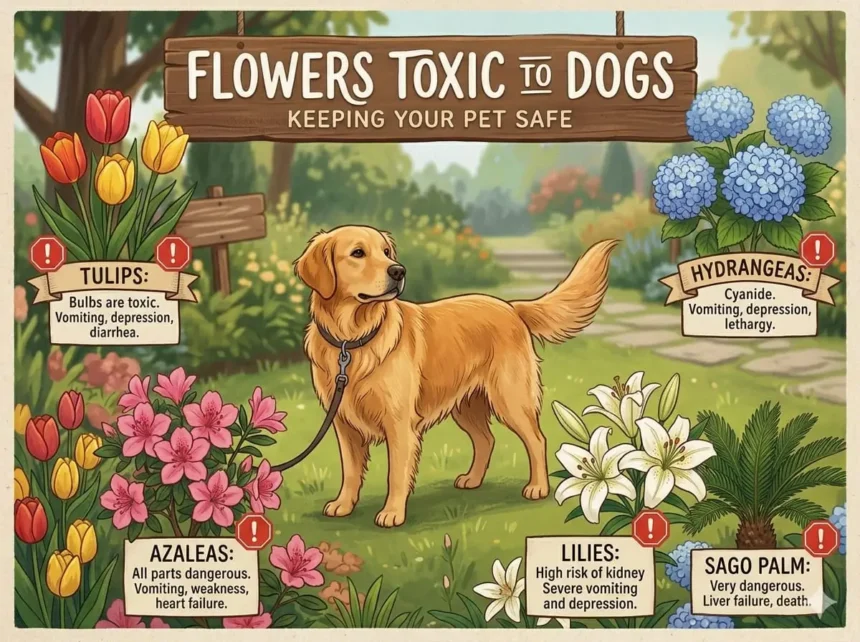
Creating a beautiful garden is important—but if you have a dog, pet safety matters just as much. Many popular outdoor and indoor flowers can be harmful to dogs if chewed, swallowed, or even dug up from bulbs.
Quick Answer:
Many common flowers toxic to dogs include tulips, daffodils, lilies, azaleas, chrysanthemums, and oleander. Depending on the plant, symptoms may range from mild vomiting or drooling to seizures, heart problems, or life-threatening poisoning.
Important:
Bulbs, seeds, roots, and leaves are often more toxic than petals.
If your dog eats an unknown flower, contact your veterinarian or pet poison expert immediately.
Symptoms of Flower Poisoning in Dogs
The symptoms depend on the flower species, amount eaten, and your dog’s size.
Common Symptoms:
- Vomiting
- Diarrhea
- Drooling
- Pawing at the mouth
- Loss of appetite
- Lethargy
Serious Symptoms:
- Tremors
- Seizures
- Weakness
- Irregular heartbeat
- Difficulty breathing
- Collapse
Emergency Warning:
Plants such as oleander, foxglove, autumn crocus, and yew can be especially dangerous.
Which Parts of Flowers Are Most Dangerous to Dogs?
Not all parts of a plant carry the same risk.
Often more toxic:
- Bulbs
- Seeds
- Roots
- Leaves
- Stems
Example:
Tulip bulbs contain more concentrated toxins than petals.
25 Common Flowers Toxic to Dogs
| Flower | Toxicity Level | Most Dangerous Parts | Possible Symptoms |
| Tulips | Moderate | Bulbs | Vomiting, drooling |
| Daffodils | Moderate | Bulbs | GI upset, lethargy |
| Lilies | Moderate | Entire plant | Vomiting |
| Azaleas | High | Entire plant | Weakness, drooling |
| Oleander | Severe | Entire plant | Heart issues |
| Chrysanthemums | Mild to Moderate | Flowers, leaves | Diarrhea |
| Hyacinths | Moderate | Bulbs | Tremors |
| Foxglove | Severe | Entire plant | Cardiac symptoms |
| Rhododendron | High | Entire plant | Vomiting |
| Hydrangea | Moderate | Leaves, flowers | GI upset |
| Iris | Mild to Moderate | Rhizomes | Drooling |
| Wisteria | Moderate | Seeds, pods | Vomiting |
| Rose of Sharon | Mild | Flowers | Diarrhea |
| Autumn Crocus | Severe | Entire plant | Organ damage |
| Larkspur | Moderate | Young plants | Weakness |
| Yew | Severe | Entire plant | Collapse |
| Cyclamen | High | Roots | Seizures |
| Amaryllis | Moderate | Bulbs | Drooling |
| Bluebells | Mild to Moderate | Bulbs | Nausea |
| Buttercup | Mild | Sap | Mouth irritation |
| Calla Lily | Moderate | Entire plant | Oral pain |
| Morning Glory | Moderate | Seeds | GI distress |
| Begonia | Mild to Moderate | Tubers | Mouth irritation |
| Poinsettia | Mild | Sap | Mild stomach upset |
| Delphinium | Moderate | Young growth | Weakness |
The Most Dangerous Garden Flowers for Dogs
Some flowers are significantly more toxic than others and should be approached with extra caution.
High-Risk Plants:
Oleander
Can affect the heart and may be fatal.
Foxglove
Contains compounds that may disrupt heart rhythm.
Autumn Crocus
Can cause severe gastrointestinal and organ-related complications.
Yew
One of the most dangerous ornamental plants for pets.
Why Dogs Eat Flowers
Dogs don’t always know what’s safe.
Common reasons:
- Curiosity
- Boredom
- Teething
- Smell attraction
- Digging instincts
Puppies are especially vulnerable.
What To Do If Your Dog Eats a Toxic Flower
Step 1:
Remove plant material from the mouth.
Step 2:
Identify the flower. Take a photo, label, or sample.
Step 3:
Watch for symptoms. Monitor for vomiting, drooling, lethargy, or abnormal behavior.
Step 4:
Contact:
- Veterinarian
- Emergency animal clinic
- Pet poison helpline
Important:
Do not induce vomiting unless a veterinary professional instructs you to do so.
Are Outdoor Garden Flowers Dangerous for Dogs?
Yes—many common landscaping flowers can be poisonous.
Some of the biggest risks come from:
- Decorative bulbs
- Seasonal flowers
- Backyard ornamentals
- Wildflowers
Always research before planting.
Are Roses Toxic to Dogs?
Good news:
True roses are generally considered non-toxic to dogs.
Risks still include:
- Thorns
- Fertilizers
- Chemical sprays
Safe Flower Alternatives for Dog Owners
If you want a pet-friendly garden, consider safer options such as:
Dog-Safe Flowers:
- Roses
- Sunflowers
- Snapdragons
- Zinnias
- Orchids
- Petunias
How To Dog-Proof Your Garden
Practical Prevention Tips:
- Fence flower beds
- Use raised planters
- Teach “leave it”
- Supervise yard time
- Avoid planting high-risk flowers
- Store bulbs securely
Frequently Asked Questions
What flower is most toxic to dogs?
Oleander, foxglove, autumn crocus, and yew are among the most dangerous.
Can dogs die from eating flowers?
Yes—some toxic flowers may cause severe poisoning or death.
Are flower petals poisonous to dogs?
Some are, but bulbs and roots are often more dangerous.
Are sunflowers safe for dogs?
Sunflowers are generally considered dog-friendly.
Is Rose of Sharon toxic to dogs?
Yes, it may cause mild digestive upset.
Final Verdict: Which Flowers Are Toxic to Dogs?
Bottom line:
Many common flowers toxic to dogs are found in everyday gardens, bouquets, and landscaping. While some cause only mild stomach upset, others can create severe medical emergencies.
Best Safety Rule:
Before adding flowers to your home or yard:
Research first, plant second.
Key Takeaway for Dog Owners
A beautiful garden should never come at the expense of your dog’s safety.
By learning which flowers are dangerous—and choosing dog-safe alternatives—you can create a yard that’s both stunning and pet-friendly.