

The distemper vaccine is one of the most important vaccines your dog can receive. Canine distemper is a serious viral disease that spreads quickly and can become life-threatening, especially in puppies and unvaccinated dogs.
Many pet owners think their dog is safe because they stay indoors or only go outside for short walks. Unfortunately, the virus can still spread through the air, shared water bowls, parks, grooming tools, or contact with infected animals.
That’s why veterinarians strongly recommend the canine distemper vaccine as part of every dog’s routine vaccination schedule.
What Is Canine Distemper?
Canine distemper is a highly contagious virus that attacks a dog’s:
- Respiratory system
- Digestive system
- Nervous system
The disease is caused by the canine distemper virus (CDV). It affects dogs of all breeds, but puppies and dogs with weak immune systems are at the highest risk.
Without proper treatment, distemper can lead to severe illness, long-term neurological damage, or death.
Why the Distemper Vaccine Is So Important
The distemper vaccine for dogs helps the immune system recognize and fight the virus before it causes serious harm.
Veterinarians consider the distemper shot for dogs a “core vaccine,” which means nearly every dog should receive it regardless of lifestyle or breed.
Benefits of the Distemper Vaccine
- Protects against a deadly viral disease
- Reduces the risk of severe complications
- Helps prevent outbreaks in communities
- Protects puppies during their most vulnerable stage
- Lowers expensive emergency vet costs later
In veterinary clinics, one of the saddest situations is seeing young puppies suffer from distemper simply because they missed their vaccines. Many of these cases could have been prevented with timely immunization.
How Dogs Get Distemper
Dogs usually catch distemper through:
- Sneezing or coughing from infected dogs
- Shared food and water bowls
- Contaminated surfaces
- Dog parks, shelters, and kennels
- Contact with wildlife like raccoons or foxes
The virus spreads easily, which is why the K9 distemper vaccine is essential even for dogs that spend most of their time indoors.
Symptoms of Canine Distemper
Distemper symptoms can start mildly and become severe over time.
Early Signs
- Fever
- Runny nose
- Watery eyes
- Coughing
- Loss of appetite
- Tiredness
Digestive Symptoms
- Vomiting
- Diarrhea
- Dehydration
- Weight loss
Nervous System Symptoms
As the disease progresses, it may affect the brain and nerves.
Watch for:
- Muscle twitching
- Tremors
- Seizures
- Difficulty walking
- Head tilting
- Paralysis
One common mistake pet owners make is assuming these symptoms are “just a cold” or stomach upset. Waiting too long to visit the vet can reduce the dog’s chances of recovery.
Distemper Vaccine Schedule for Dogs
The distemper vaccine dogs receive is usually given as part of a combination vaccine, often called DHPP or DAPP.
Puppy Vaccination Schedule
Most puppies receive the canine distemper vaccine at:
- 6–8 weeks
- 10–12 weeks
- 14–16 weeks
Adult Dog Boosters
After the puppy series:
- Booster after 1 year
- Then every 1–3 years depending on your veterinarian’s recommendation
Always follow your vet’s schedule because missed boosters can leave your dog unprotected.
What Happens During a Distemper Shot for Dogs?
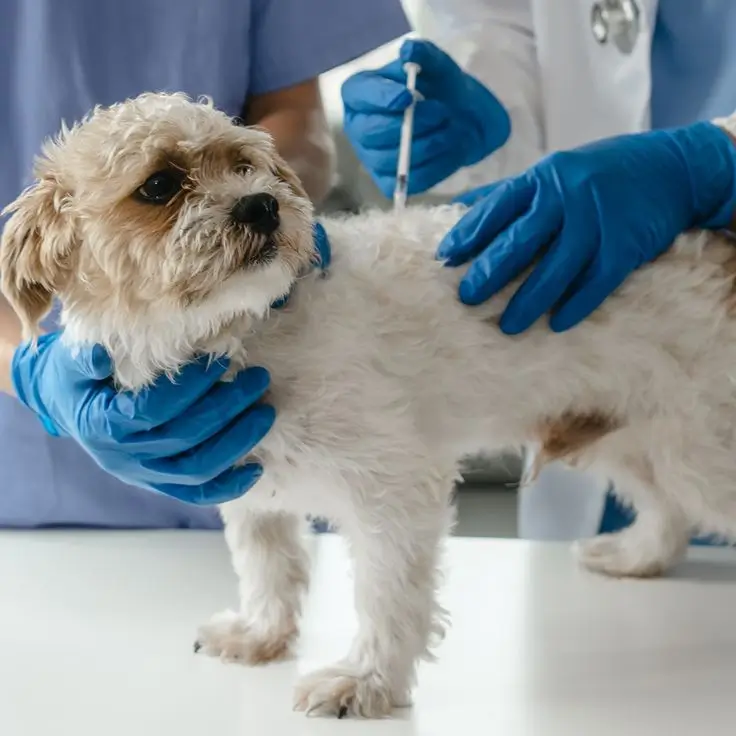
The distemper shot for dogs is a quick injection usually given during a routine vet visit.
Most dogs handle it very well. Your veterinarian may also perform:
- A general health exam
- Weight check
- Parasite screening
- Discussion about lifestyle risks
Keeping vaccination records updated is extremely important, especially if your dog visits groomers, boarding facilities, or daycare centers.
Possible Side Effects of the Distemper Vaccine
Most vaccine reactions are mild and temporary.
Mild Side Effects
- Sleepiness
- Mild fever
- Soreness at injection site
- Reduced appetite for a day
Rare Serious Reactions
Contact your vet immediately if you notice:
- Facial swelling
- Severe vomiting
- Trouble breathing
- Collapse
- Hives
Serious vaccine reactions are rare, and the benefits of the distemper vaccine for dogs far outweigh the risks.
Can Vaccinated Dogs Still Get Distemper?
In rare cases, vaccinated dogs can still become infected, but the illness is usually much milder.
Dogs that are fully vaccinated have a significantly better chance of avoiding severe complications compared to unvaccinated dogs.
Treatment for Canine Distemper
There is no direct cure for distemper. Treatment focuses on supportive care and helping the dog’s immune system fight the virus.
Treatment may include:
- IV fluids
- Antibiotics for secondary infections
- Anti-seizure medication
- Nutritional support
- Oxygen therapy
Severe cases often require hospitalization.
Common Mistakes Dog Owners Make
Skipping Puppy Vaccines
Missing even one vaccine appointment can leave puppies vulnerable during a critical stage.
Assuming Indoor Dogs Are Safe
The virus can travel through contaminated clothing, surfaces, and other animals.
Ignoring Mild Symptoms
Early treatment gives dogs a better chance of survival.
Delaying Booster Shots
Protection decreases over time if boosters are skipped.
Veterinary Tips to Keep Your Dog Protected
Avoid High-Risk Areas Before Full Vaccination
Puppies should avoid dog parks and public areas until they complete their vaccine series.
Keep Stress Low
Stress can weaken the immune system, especially in puppies recovering from illness.
Maintain Good Nutrition
Healthy diets help support a stronger immune response.
Schedule Regular Wellness Exams
Routine vet visits help catch health problems early and keep vaccines up to date.
Is the Distemper Vaccine Required?
Many boarding facilities, groomers, and dog daycare centers require proof of the distemper vaccine before allowing entry.
Even when not legally required, veterinarians strongly recommend the K9 distemper vaccine because of how dangerous the disease can be.
Frequently Asked Questions
How often do dogs need the distemper vaccine?
Most dogs need booster shots every 1–3 years after their initial puppy series. Your veterinarian will recommend the best schedule.
Can puppies get distemper before vaccination?
Yes. Puppies are highly vulnerable before completing their vaccine series.
Is the distemper vaccine safe for dogs?
Yes. The distemper vaccine for dogs is considered very safe, and serious side effects are rare.
What is included in the canine distemper vaccine?
The vaccine is often combined with protection against parvovirus, adenovirus, and parainfluenza.
Can older dogs get the distemper shot?
Yes. Senior dogs may still need boosters depending on their health history and lifestyle.
Final Thoughts
The distemper vaccine is one of the best ways to protect your dog from a painful and potentially fatal disease. Whether you have a new puppy or an adult dog, staying current on the canine distemper vaccine schedule can save your pet’s life.
If you are unsure when your dog last received a distemper shot for dogs, contact your veterinarian and review their vaccination records. Prevention is always easier, safer, and less expensive than treating canine distemper later.