

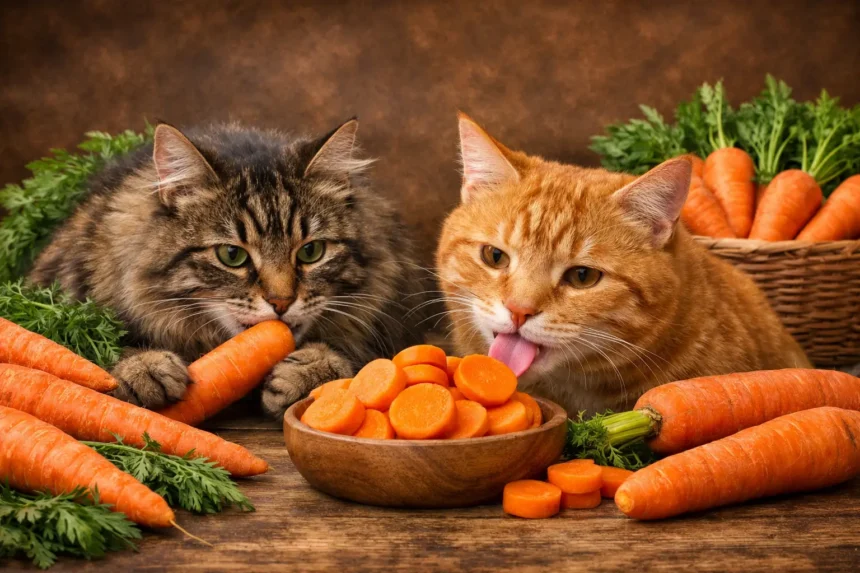
Yes, cats can eat carrots in moderation. Carrots are not toxic to cats and can be a safe occasional treat when cooked and served properly. However, because cats are obligate carnivores, carrots should never replace the meat-based nutrition they need to stay healthy.
Many cat owners wonder whether sharing a piece of carrot with their feline friend is safe. The good news is that most cats can eat small amounts of carrots without problems. Still, there are a few important things you should know before adding this vegetable to your cat’s diet.
Are Carrots Safe for Cats?
Carrots are considered safe for cats when they are:
- Cooked until soft
- Served plain without seasoning
- Cut into small, bite-sized pieces
- Given as an occasional treat
Unlike some vegetables that may upset a cat’s stomach, carrots are generally well tolerated when fed in moderation.
Veterinarians often remind pet owners that treats should make up no more than 10% of a cat’s daily calorie intake. The remaining 90% should come from a complete and balanced cat food.
Nutritional Benefits of Carrots for Cats
Although cats do not need vegetables to survive, carrots contain several nutrients that may offer small health benefits.
Fiber
Carrots contain dietary fiber, which can support healthy digestion and regular bowel movements.
Antioxidants
Carrots are rich in antioxidants that help protect cells from damage caused by free radicals.
Vitamins and Minerals
Carrots contain nutrients such as:
- Vitamin A precursors (beta-carotene)
- Potassium
- Vitamin K
- Small amounts of vitamin C
It’s important to note that cats do not convert beta-carotene into vitamin A as efficiently as humans and dogs. Therefore, carrots are not a significant source of vitamin A for cats.
Can Cats Eat Raw Carrots?
Raw carrots are not toxic, but they are generally not the best choice.
Raw carrots can be:
- Difficult for cats to chew
- Hard to digest
- A potential choking hazard
Most veterinarians recommend steaming or boiling carrots until they are soft before offering them to your cat.
Can Kittens Eat Carrots?
Kittens can eat tiny amounts of cooked carrot occasionally, but it is usually unnecessary.
Young kittens have specific nutritional needs for growth and development. Their diet should primarily consist of high-quality kitten food that provides the protein, fat, vitamins, and minerals they require.
If you decide to offer carrot to a kitten, make sure it is:
- Fully cooked
- Mashed or finely chopped
- Given in very small quantities
Potential Risks of Feeding Carrots to Cats
While carrots are generally safe, there are some risks pet owners should be aware of.
Digestive Upset
Introducing any new food too quickly can cause:
- Vomiting
- Diarrhea
- Gas
- Stomach discomfort
If your cat experiences digestive problems after eating carrots, stop feeding them and monitor their condition.
Choking Hazard
Large chunks of carrot can become lodged in a cat’s throat.
Always cut carrots into small pieces and cook them until soft.
Excessive Treat Feeding
One of the most common mistakes cat owners make is offering too many treats, even healthy ones.
Too many carrots can:
- Reduce appetite for regular cat food
- Cause digestive upset
- Contribute to an unbalanced diet
Signs Your Cat May Not Tolerate Carrots
Every cat is different. Some cats may be sensitive to new foods.
Watch for symptoms such as:
- Vomiting
- Diarrhea
- Excessive drooling
- Loss of appetite
- Lethargy
- Abdominal discomfort
If these signs develop after eating carrots, discontinue feeding them and contact your veterinarian if symptoms persist.
How to Safely Feed Carrots to Your Cat
Follow these simple steps:
Step 1: Wash Thoroughly
Remove dirt, pesticides, and contaminants.
Step 2: Cook Until Soft
Steam or boil the carrot until it becomes easy to mash with a fork.
Step 3: Avoid Seasonings
Do not add:
- Salt
- Garlic
- Onion
- Butter
- Oils
- Spices
Garlic and onion are especially dangerous because they are toxic to cats.
Step 4: Serve Small Portions
Start with a small piece and observe your cat’s reaction.
Veterinary Insight: Why Most Cats Ignore Carrots
In veterinary practice, many cat owners are surprised when their cat shows little interest in vegetables. This is completely normal.
Cats are natural carnivores and are biologically designed to seek out animal-based proteins. Unlike dogs, they typically do not crave fruits and vegetables. Some cats may enjoy the texture of cooked carrots, while others will walk away without taking a bite.
If your cat refuses carrots, there is no nutritional reason to encourage them to eat them.
Common Mistakes Cat Owners Make
Feeding Raw Carrot Chunks
Large raw pieces can be difficult to chew and may increase choking risk.
Using Seasoned Carrots
Many cooked vegetables prepared for humans contain ingredients that are unsafe for cats.
Replacing Meals with Vegetables
Cats need animal protein. Vegetables should never replace a complete cat diet.
Offering Too Much
Even healthy treats can cause digestive upset when fed excessively.
The Bottom Line
Cats can safely eat carrots when they are cooked, plain, and served in small amounts. While carrots provide some fiber and antioxidants, they do not offer significant nutritional benefits compared to a complete and balanced cat food.
If your cat enjoys carrots, they can be a safe occasional treat. Just remember that meat-based nutrition should always remain the foundation of your cat’s diet.
Frequently Asked Questions
Can cats eat cooked carrots?
Yes. Cooked carrots are the safest option because they are easier to chew and digest.
Can cats eat carrot cake?
No. Carrot cake often contains sugar, spices, raisins, chocolate, or other ingredients that may be harmful to cats.
Can cats eat canned carrots?
Plain canned carrots without salt, seasonings, or preservatives may be safe in small amounts. Always check the ingredient list first.
How much carrot can a cat eat?
A few small pieces of cooked carrot once or twice a week is generally enough.
Are carrots toxic to cats?
No, carrots are not toxic to cats. However, they should only be offered occasionally and as part of a balanced diet.
Why does my cat like carrots?
Some cats enjoy the texture, smell, or curiosity of a new food. Every cat has unique preferences.