

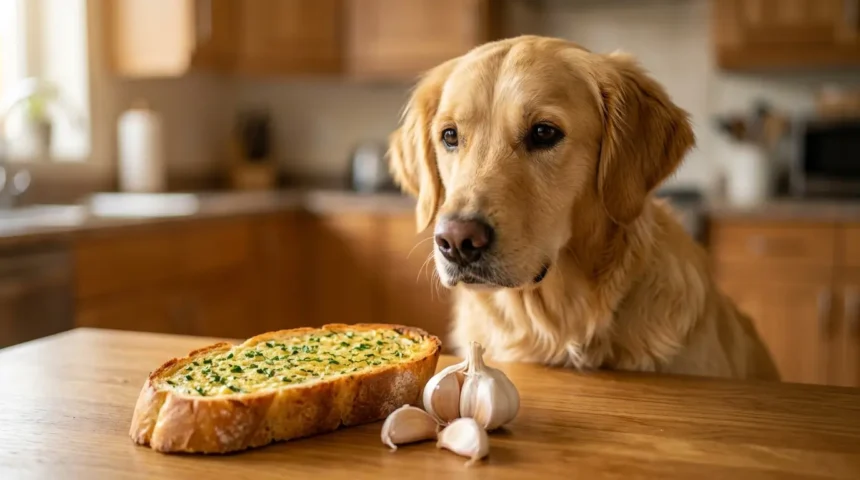
If your dog begs for a bite of garlic bread, you may wonder, “Can dogs eat garlic bread?”
The safest answer is no. Garlic bread should not be intentionally given to dogs. Garlic belongs to the Allium family, along with onions, chives, and leeks. These plants contain compounds that can damage red blood cells and, when enough is consumed, cause hemolytic anemia. Garlic can also cause digestive upset.
The risk depends on factors such as the amount eaten, the form of garlic, and the dog’s size. Garlic powder and dehydrated garlic are particularly important because they are concentrated forms.
In this guide, we’ll explain why garlic bread is unsafe, what symptoms to watch for, what to do if your dog eats it, and which treats are safer alternatives.
What Is Garlic Bread?
Garlic bread is usually made from bread spread with butter or oil, garlic, herbs, and sometimes cheese before being baked or toasted.
For dogs, the main concern is garlic, rather than the bread itself.
Garlic may be used as:
- Fresh chopped or crushed garlic
- Cooked garlic
- Minced garlic
- Garlic paste
- Garlic powder
- Dehydrated garlic
Veterinary references report toxicity from raw, cooked, dehydrated, and granulated forms of garlic and other Allium plants.
Other ingredients in garlic bread can also be unsuitable for dogs. Butter and other high-fat ingredients may cause digestive upset, while large amounts of fatty food can increase the risk of pancreatitis in susceptible dogs.
Can Dogs Eat Garlic Bread?
No, garlic bread is not a recommended food for dogs.
Garlic can damage red blood cells and potentially cause hemolytic anemia. Dogs may also develop vomiting, diarrhea, reduced appetite, weakness, rapid breathing, or an increased heart rate after significant Allium exposure.
A dog that steals a tiny crumb does not necessarily develop poisoning. The actual risk depends on the amount consumed and the concentration of garlic in the food.
However, because garlic bread provides no nutritional benefit that dogs need and contains a potentially toxic ingredient, there is no good reason to offer it as a treat.
Why Is Garlic Bad for Dogs?

Garlic contains sulfur-containing compounds that can cause oxidative damage to red blood cells.
When enough garlic or other Allium material is consumed, the damaged red blood cells can break down, resulting in hemolytic anemia. Veterinary sources describe this as one of the major complications of Allium toxicosis in dogs.
Garlic is also considered more toxic than onion on a weight-for-weight basis. Merck Veterinary Manual notes that garlic is approximately 3–5 times more toxic than onion.
Does Cooking Make Garlic Safe for Dogs?
No. Cooking does not make garlic a safe food for dogs.
Dogs have developed toxicity after consuming raw, cooked, dehydrated, and granulated forms of garlic and onion. Concentrated forms such as garlic powder can be particularly concerning because a smaller quantity may contain a relatively large amount of garlic material.
How Much Garlic Bread Is Dangerous for a Dog?
There is no simple “one slice” rule that applies to every dog.
The potential risk depends on:
- Your dog’s body weight
- The amount of garlic consumed
- Whether fresh garlic or concentrated garlic powder was used
- Whether the exposure happened once or repeatedly
- Your dog’s individual health and sensitivity
This is why it is better not to calculate a supposedly safe amount of garlic bread at home.
Published toxicity figures for Allium exposure vary according to the plant, form, and circumstances of exposure, and a slice of garlic bread does not contain a standardized amount of garlic.
If your dog has eaten garlic bread, tell your veterinarian:
- Your dog’s approximate weight
- How much garlic bread was eaten
- When it was eaten
- Whether the bread contained fresh garlic, garlic powder, or garlic paste
- Any symptoms your dog is showing
That information can help your veterinarian determine the appropriate response.
Symptoms of Garlic Toxicity in Dogs
One important thing to understand is that symptoms do not always appear immediately.
Digestive signs can occur relatively early, while signs related to red blood cell destruction may take several days to become obvious. Merck Veterinary Manual notes that hemolysis typically develops around 3–5 days after exposure.
Early Digestive Symptoms
Possible signs include:
- Vomiting
- Diarrhea
- Reduced appetite
- Abdominal discomfort
- Excessive drooling
- Nausea
These symptoms are not specific to garlic poisoning, so your veterinarian should assess the situation if there has been a known garlic exposure.
Signs of Anemia
As red blood cells are damaged, a dog may develop signs associated with anemia, including:
- Weakness
- Lethargy
- Pale gums
- Rapid breathing
- Rapid heart rate
- Reduced tolerance for exercise
- Yellowish gums or skin
- Dark or reddish urine
Severe cases can result in collapse and can be life-threatening.
When Do Symptoms Appear?
The timing can vary.
Some dogs may develop digestive symptoms relatively soon after eating an offending food, while anemia-related signs may not become noticeable for several days. This delayed onset is one reason owners should not assume that a dog is safe simply because it appears normal immediately after eating garlic.
What Should You Do If Your Dog Eats Garlic Bread?
If your dog has eaten garlic bread, don’t panic, but don’t ignore the exposure either.
1. Remove the Remaining Garlic Bread
Prevent your dog from eating more and keep the packaging or ingredient information if available.
2. Estimate How Much Was Eaten
Try to determine:
- How many pieces were eaten
- Approximately how large the pieces were
- Whether the bread contained fresh garlic or garlic powder
- When your dog ate it
3. Contact Your Veterinarian
Call your veterinarian and explain what happened.
Because the amount of garlic in garlic bread varies considerably, your veterinarian can help determine whether your dog needs examination or monitoring.
4. Do Not Induce Vomiting Without Veterinary Guidance
Do not give your dog hydrogen peroxide or another substance to make it vomit unless a veterinarian or qualified animal poison professional specifically tells you to do so.
For some poison exposures, veterinary professionals may use decontamination procedures soon after ingestion, but the appropriate approach depends on the substance, timing, and condition of the animal.
5. Watch for Delayed Symptoms
Even if your dog initially seems fine, continue watching for symptoms such as weakness, pale gums, vomiting, dark urine, rapid breathing, or collapse.
If severe symptoms develop, seek emergency veterinary care immediately.
How Do Veterinarians Treat Garlic Toxicity?
There is no specific antidote that simply reverses garlic toxicity.
Treatment depends on how much was consumed, how recently the exposure occurred, and whether the dog has developed complications.
Decontamination
When appropriate, a veterinarian may perform gastrointestinal decontamination after a recent ingestion.
Activated charcoal may also be considered in some cases, although its effectiveness for Allium exposure is uncertain.
Blood Tests
If toxicity is suspected, a veterinarian may recommend blood testing to look for evidence of red blood cell damage and anemia.
Because anemia can develop later, follow-up monitoring may be necessary.
Supportive Treatment
Depending on the severity of the poisoning, treatment may include:
- Intravenous fluids
- Oxygen supplementation
- Monitoring of blood parameters
- Treatment for digestive symptoms
- Blood transfusion in severe anemia
Merck Veterinary Manual notes that oxygen and blood transfusion may be required for life-threatening anemia, while IV fluids can help support the kidneys.
Can Dogs Eat Garlic Powder?
Dogs should not be intentionally given garlic powder.
Garlic powder is a concentrated form of garlic and is therefore particularly important in accidental poisoning cases. Veterinary sources specifically identify dehydrated and concentrated Allium products as potential sources of toxicosis.
Check ingredient labels on human foods, seasonings, sauces, and prepared foods before sharing them with your dog.
Can Garlic Be Used to Prevent Fleas?
Garlic is sometimes promoted online as a natural flea or parasite remedy for dogs.
However, garlic is not a recommended substitute for proven veterinary parasite-control products. Pet Poison Helpline notes that garlic has been promoted as a flea remedy but is not recommended for this purpose.
If your dog has fleas or ticks, ask your veterinarian about an appropriate parasite-control product based on your dog’s age, weight, and health.
What About Garlic in Commercial Dog Food?
This question can be confusing because pet owners may see garlic listed in some products.
The important distinction is that you should not add garlic to your dog’s diet or deliberately feed garlic as a home remedy.
If you are concerned about a particular commercial dog food, treat, or supplement that contains garlic, check the complete ingredient list and discuss the product with your veterinarian rather than assuming that every product has the same risk.
Safe Alternatives to Garlic Bread for Dogs
If your dog enjoys begging for table food, there are safer options.
Depending on your dog’s individual diet and health, small amounts of plain foods such as these may be appropriate:
- Plain cooked chicken without garlic, onion, or seasoning
- Carrot pieces
- Cucumber pieces
- Plain pumpkin
- Small pieces of apple with the seeds and core removed
- Plain bread in moderation, provided it contains no toxic ingredients
For example, if you want to give your dog bread as an occasional treat, choose plain bread without garlic, onion, raisins, xylitol, or other potentially harmful ingredients.
You can also use a commercial dog treat formulated specifically for dogs.
Frequently Asked Questions
Is garlic bread toxic to dogs?
Garlic bread can be toxic to dogs because it contains garlic, which can damage red blood cells and cause hemolytic anemia when enough is consumed. Garlic can also cause gastrointestinal upset.
What if my dog ate a small piece of garlic bread?
A small piece does not automatically mean your dog will develop poisoning. The risk depends on your dog’s size, the amount eaten, and the concentration of garlic. Contact your veterinarian for advice, particularly if the bread contained a significant amount of garlic or garlic powder.
Is cooked garlic safe for dogs?
No. Cooking does not make garlic a recommended food for dogs. Dogs can develop Allium toxicosis after consuming raw, cooked, dehydrated, or granulated garlic.
Is garlic powder worse than fresh garlic?
Garlic powder is concentrated, so relatively small amounts can contain more garlic material than an equivalent-looking amount of fresh garlic. Concentrated Allium products are an important concern in poisoning cases.
Can garlic cause anemia in dogs?
Yes. Sufficient exposure to garlic can damage red blood cells and cause hemolytic anemia. Signs can include weakness, pale gums, rapid breathing, rapid heart rate, jaundice, and dark urine.
How long after eating garlic can a dog become sick?
Digestive symptoms may occur earlier, while signs caused by red blood cell destruction can take several days. Merck Veterinary Manual reports that hemolysis typically occurs 3–5 days after exposure.
Can dogs eat bread?
Plain bread can be given to many healthy dogs in small amounts, but it should not contain ingredients such as garlic, onion, raisins, or xylitol. Bread should remain an occasional treat rather than a major part of a dog’s diet.
Final Takeaway
Can dogs eat garlic bread? No—garlic bread should not be intentionally fed to dogs.
Garlic belongs to the Allium family and can damage red blood cells, potentially causing hemolytic anemia. Raw, cooked, dehydrated, and powdered forms can all be problematic, while concentrated garlic products deserve particular caution.
If your dog accidentally eats garlic bread, don’t assume that the absence of immediate symptoms means everything is fine. Contact your veterinarian, provide details about the amount and type of garlic involved, and monitor your dog for delayed symptoms.
For everyday treats, choose plain, dog-appropriate foods instead of seasoned human foods. Keeping garlic bread and other garlic-containing foods out of your dog’s reach is the simplest way to prevent garlic toxicity.