
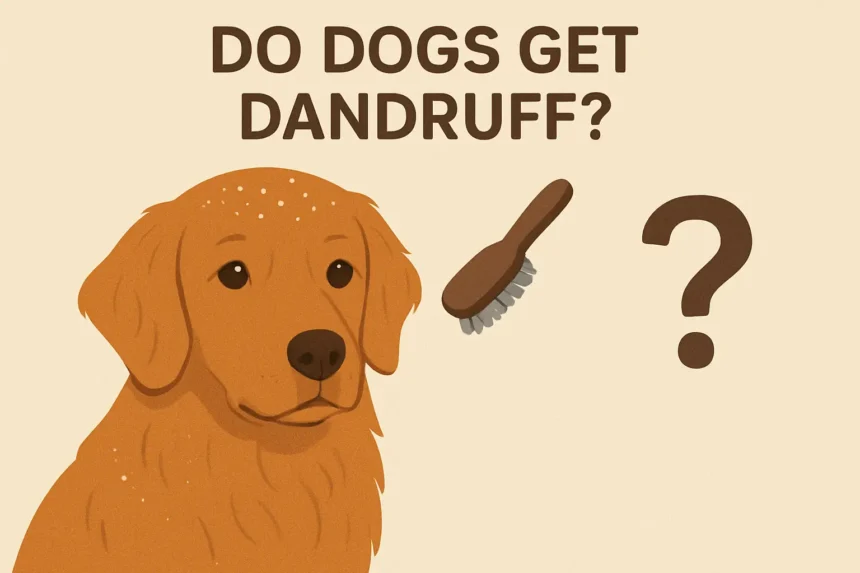
Dogs can get dandruff just like humans. This condition, sometimes linked to canine seborrhea, happens when the skin sheds flakes faster than normal due to dryness, irritation, or medical conditions. If you notice white flakes on your dog’s fur, bedding, or clothing, it’s time to investigate.
Can Dogs Get Dandruff?
Absolutely. Dogs can get dandruff at any age, in any breed, and for many reasons:
Common Causes of Dog Dandruff
- Dry Skin – Often caused by low humidity, cold weather, or overbathing.
- Allergies – Reactions to pollen, dust mites, certain foods, or flea bites.
- Poor Diet – Lack of Omega-3 & Omega-6 fatty acids.
- Parasites – Fleas, ticks, and Cheyletiella mites (“walking dandruff”).
Medical Conditions
- Seborrhea (dry or oily skin type)
- Hypothyroidism
- Cushing’s disease
- Demodicosis (Demodex mites)
- Fungal or bacterial skin infections
Signs Your Dog’s Dandruff May Be Serious
Seek veterinary advice if you see:- Greasy or large flakes – Persistent itching or redness – Hair loss or bald patches – Bad odor from skin – Sores, scabs, or crusting
How to Get Rid of Dog Dandruff — Step-by-Step Guide
1. Try Natural Remedies (Home Treatments)
(Vet approval recommended before starting)
- Oatmeal Bath—Blend 1 cup of oatmeal into a fine powder, mix in warm water, and soak your dog for 10–15 minutes to soothe dryness.
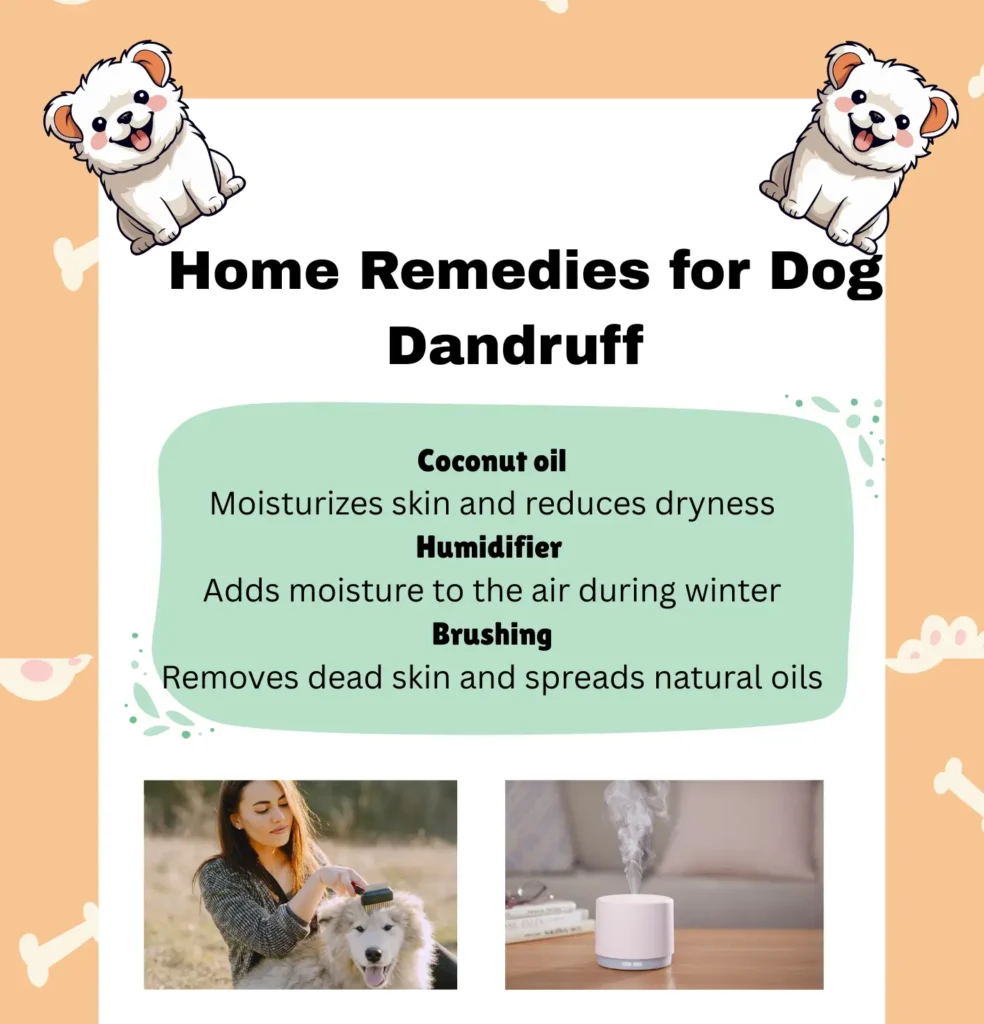
- Coconut Oil Massage – Rub a small amount into dry areas 2–3 times a week.
- Olive Oil in Diet – Add 1 tsp daily for medium dogs to support skin hydration.
- Fenugreek Seed Paste—Soak seeds overnight, grind into paste, apply to affected skin for 15 minutes, then rinse.
- Aloe Vera Gel – Apply a thin layer for cooling relief.
- Diluted Apple Cider Vinegar Spray – Mix equal parts water and ACV, spray lightly to restore pH balance (avoid open wounds).
2. Choose the Right Shampoo & Ingredients
For mild dandruff: – Oatmeal, aloe vera, coconut, chamomile-based shampoos
For severe cases or seborrhea: – Salicylic acid, sulfur, or zinc pyrithione shampoos (vet-approved) – Douxo S3 SEB – Recommended for oily or dry seborrheic dermatitis
⚠ Avoid human shampoos — they disrupt your dog’s skin pH.
More about: Best Dog Dandruff Shampoos: Vet-Reviewed Guide for Healthy Skin
3. Improve Diet & Nutrition
- Feed high-quality, nutrient-rich dog food.
- Add Omega-3 & Omega-6 fatty acids from fish oil, salmon, sardines, or flaxseed.
Real-life tip from a dog owner: “One teaspoon of fish oil a day cleared up our boy’s dandruff in about a month!”
4. Maintain a Regular Grooming Routine
- Brush daily (or at least 3–4 times a week) to distribute natural oils.
- Avoid overbathing — once every 3–4 weeks is ideal unless directed by your vet.
5. Adjust Environmental Factors
- Use a humidifier during dry seasons.
- Wash bedding weekly with hypoallergenic detergent.
- Keep your dog well-hydrated.
6. Treat Underlying Medical Issues
If dandruff persists despite home care, your vet may: – Test for parasites, hormonal imbalances, or infections – Prescribe medicated baths, antibiotics, antifungals, or hormone therapy
Daily Routine & Prevention Tips
- Balanced diet with skin-supporting nutrients
- Regular brushing and coat care
- Year-round flea/tick/mite prevention
- Avoid harsh grooming products
- Manage stress (enrichment, exercise, calm environment)
Quick Troubleshooting Checklist
If your dog’s dandruff is accompanied by: – Severe itching – Odor – Hair loss – Greasy, yellow flakes Visit your veterinarian promptly.
Vet’s Note
This article is based on veterinary guidance and research. Always consult a licensed veterinarian before starting new treatments.
Final Takeaways
- Do dogs get dandruff? Yes — it’s common but treatable.
- Can dogs get dandruff? Absolutely, from dryness to medical conditions.
- How to get rid of dog dandruff? Combine moisturizing care, proper diet, environmental adjustments, and medical support if needed.
With the right approach, you can restore your dog’s coat to a healthy, flake-free shine.
FAQs About Dog Dandruff
Is dog dandruff contagious to humans?
Not usually, except if caused by mites or fungal infections.
How long does dandruff treatment take?
Mild cases improve in 1–3 weeks; chronic cases may require ongoing management.
Can I use human dandruff shampoo?
No — human shampoos can irritate your dog’s skin and worsen the problem