

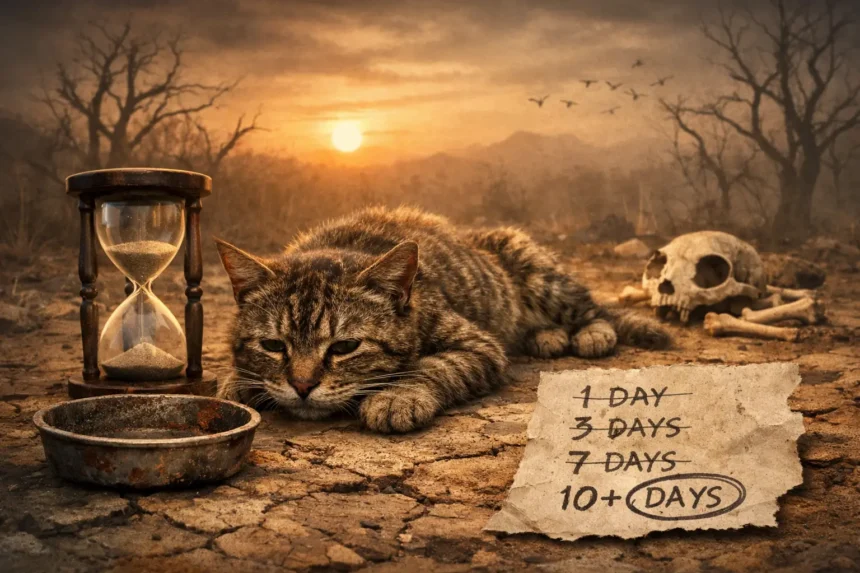
If your cat suddenly stops eating, it’s natural to feel concerned. Cats can be picky eaters, but refusing food for too long is never something to ignore.
In general, a healthy adult cat may survive for one to two weeks without food if water is available, but serious health problems can develop much sooner. Most veterinarians recommend seeking advice if your cat has not eaten for 24 hours or longer, especially if they are showing other signs of illness.
The longer a cat goes without food, the greater the risk of dangerous complications, including liver disease, dehydration, and malnutrition.
How Long Can Cats Safely Go Without Food?
There is a big difference between surviving and staying healthy.
While some cats may physically survive for days without eating, their bodies begin to suffer much earlier.
Adult Cats
A healthy adult cat should not go more than 24 hours without eating. After this point, veterinary attention is recommended.
Kittens
Kittens are much more vulnerable than adult cats.
Because they have smaller energy reserves and higher nutritional needs, kittens can become seriously ill after missing only a few meals.
If a kitten refuses food for more than 12 hours, contact a veterinarian immediately.
Senior Cats
Older cats often have underlying health conditions that can make fasting more dangerous. Even a short period without food can worsen existing medical problems.
Why Is Not Eating So Dangerous for Cats?
Unlike many other animals, cats are at risk of developing a serious condition called hepatic lipidosis, commonly known as fatty liver disease.
When a cat stops eating, the body begins breaking down stored fat for energy. The liver may become overwhelmed by this process, causing fat to build up inside liver cells.
Without prompt treatment, hepatic lipidosis can become life-threatening.
Veterinary Insight
One of the most common emergency cases veterinarians see is an overweight cat that suddenly stops eating. Many owners assume their cat is simply being fussy, but within a few days, serious liver problems can begin to develop.
This is why a loss of appetite in cats should never be dismissed.
Common Reasons Cats Stop Eating
There are many reasons a cat may refuse food.
Dental Problems
Painful teeth or inflamed gums can make eating uncomfortable.
Common signs include:
- Dropping food from the mouth
- Bad breath
- Excessive drooling
- Pawing at the face
Stress and Anxiety
Cats are sensitive to changes in their environment.
Common stress triggers include:
- Moving to a new home
- New pets
- Loud noises
- Changes in routine
- Boarding or travel
Illness
Many medical conditions can reduce appetite, including:
- Kidney disease
- Liver disease
- Diabetes
- Infections
- Cancer
- Gastrointestinal disorders
Nausea or Digestive Upset
Cats experiencing nausea may approach food but refuse to eat it.
You may notice:
- Lip licking
- Drooling
- Vomiting
- Hiding
Food Changes
Some cats dislike sudden changes in food texture, flavor, or brand.
Symptoms That Require Immediate Veterinary Attention
Contact your veterinarian as soon as possible if your cat has stopped eating and shows any of the following symptoms:
- Vomiting
- Diarrhea
- Lethargy
- Difficulty breathing
- Weight loss
- Yellow gums, skin, or eyes
- Excessive drooling
- Signs of pain
- Complete refusal to drink water
These symptoms may indicate a serious underlying medical condition.
What Happens When a Cat Doesn’t Eat?
Within 24 Hours
- Hunger increases
- Energy levels may decrease
- Mild dehydration may begin
After 2–3 Days
- Fatty liver disease may start developing
- Muscle loss begins
- Weakness becomes more noticeable
After Several Days
- Severe dehydration
- Organ dysfunction
- Significant weight loss
- Increased risk of life-threatening complications
What Should You Do If Your Cat Won’t Eat?
Check for Obvious Problems
Look for:
- Dental issues
- Vomiting
- Signs of injury
- Changes in behavior
Encourage Eating
You can try:
- Warming wet food slightly
- Offering strong-smelling foods
- Providing a quiet feeding area
- Hand-feeding small amounts
Ensure Fresh Water Is Available
Hydration is just as important as nutrition.
Monitor your cat’s water intake closely.
Contact Your Veterinarian
If your cat has not eaten for 24 hours or more, schedule a veterinary examination.
Common Mistakes Cat Owners Make
Assuming the Cat Is Just Being Picky
A sudden loss of appetite is often a symptom of illness rather than stubborn behavior.
Waiting Too Long
Many owners wait several days before seeking help. Early treatment is often simpler, less expensive, and more effective.
Changing Foods Repeatedly
Constantly switching foods can sometimes make appetite problems worse.
Force Feeding Without Veterinary Advice
Improper force feeding can cause stress, aspiration, or injury.
How Veterinarians Treat Cats That Won’t Eat
Treatment depends on the underlying cause.
Your veterinarian may recommend:
- Blood tests
- Dental treatment
- Fluid therapy
- Anti-nausea medications
- Appetite stimulants
- Nutritional support
- Hospitalization in severe cases
Early treatment usually leads to a better outcome.
How to Prevent Appetite Problems in Cats
- Schedule regular veterinary checkups
- Feed a balanced diet
- Introduce new foods gradually
- Maintain a consistent routine
- Monitor eating habits daily
- Address dental issues promptly
Knowing your cat’s normal eating behavior can help you spot problems before they become serious.
The Bottom Line
A cat should never go more than 24 hours without food. While some cats may survive longer, the risk of serious complications increases quickly, especially due to fatty liver disease.
If your cat refuses food for a day or longer, or shows signs of illness, contact your veterinarian as soon as possible. Early intervention can make a significant difference in your cat’s recovery and overall health.
Frequently Asked Questions
Can a cat survive three days without food?
Some cats may survive three days without food, but serious health complications can begin developing during this time. Veterinary attention is recommended.
How long can a cat go without food but with water?
A healthy cat may survive for one to two weeks with access to water, but severe health issues can occur much sooner.
How long can a kitten go without food?
Kittens should not go more than 12 hours without eating. They can become weak and dehydrated very quickly.
What if my cat is drinking water but not eating?
This can still indicate a serious medical problem. If your cat refuses food for 24 hours, contact your veterinarian.
When should I take my cat to the vet for not eating?
Seek veterinary advice if your cat has not eaten for 24 hours, or sooner if they are a kitten, senior cat, or showing signs of illness.