
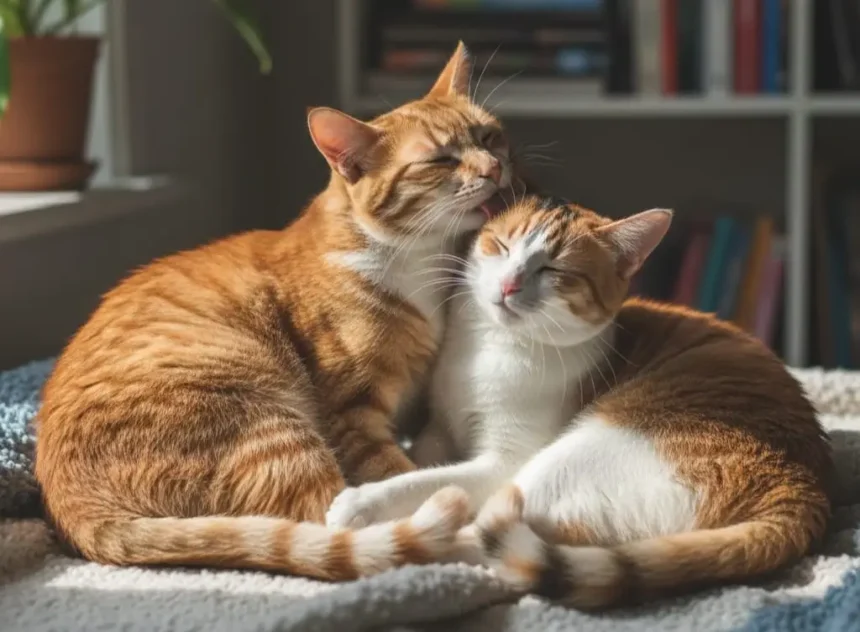
Have you ever watched two cats carefully licking each other’s fur and wondered what drives this intimate behavior? Cat grooming behavior, scientifically known as allogrooming, is a fascinating aspect of feline social interaction that reveals much about cat relationships, communication, and emotional bonds. Understanding why cats groom each other can help pet owners better interpret their cats’ behavior and strengthen the human-animal bond.
What Is Allogrooming in Cats?
Allogrooming is the term used by animal behaviorists to describe mutual grooming between cats. This social grooming behavior involves one cat licking another cat’s fur, typically focusing on areas that are difficult for cats to reach themselves, such as the head, neck, ears, and face.
Unlike self-grooming, which cats perform for hygiene and temperature regulation, mutual grooming serves primarily social and emotional functions within feline communities.
7 Reasons Why Cats Groom Each Other
1. Building and Maintaining Social Bonds
The primary reason cats groom each other is to establish and reinforce social connections. When cats engage in mutual grooming, they’re essentially saying “you’re part of my family.” This behavior is most commonly observed between:
- Mother cats and their kittens
- Sibling cats from the same litter
- Cats that have lived together for extended periods
- Bonded pairs in multi-cat households
Cat bonding through grooming releases endorphins, creating positive associations between the cats involved and strengthening their relationship over time.
2. Showing Affection and Trust
Grooming is one of the clearest signs of feline affection. When a cat grooms another, they’re demonstrating trust and vulnerability. The act of allowing another cat to groom sensitive areas like the face and neck indicates a deep level of comfort and security within the relationship.
Cats that groom each other frequently typically have strong emotional bonds and feel safe in each other’s presence.
3. Establishing Social Hierarchy
Interestingly, cat grooming behavior can also reflect social structure within a group. Research has shown that cats often groom those they perceive as higher-ranking members of their social group. However, this isn’t always about dominance—it can also be a sign of respect and social cohesion.
In multi-cat households, you might notice that one cat does most of the grooming, which may indicate their position within the household hierarchy.
4. Reaching Difficult Areas
Practical hygiene plays a role in mutual grooming. Cats have remarkable flexibility, but even they struggle to clean certain areas effectively:
- Behind the ears
- Top of the head
- Back of the neck
- Upper shoulders
By grooming each other, cats help maintain cleanliness in these hard-to-reach spots, contributing to overall feline hygiene and health.
5. Reducing Stress and Anxiety
Cat grooming serves as a natural stress-relief mechanism. The rhythmic motion of licking and the physical contact involved in mutual grooming can have calming effects on both cats. This behavior releases oxytocin, often called the “bonding hormone,” which promotes relaxation and reduces anxiety.
In stressful situations or new environments, cats may groom each other more frequently as a coping mechanism and source of comfort.
6. Scent Mixing and Colony Recognition
Cats rely heavily on scent for identification and communication. When cats groom each other, they exchange and mix their scents, creating a shared “colony odor.” This communal scent helps cats recognize members of their social group and strengthens their sense of belonging.
This scent exchange through grooming is particularly important in multi-cat households, helping to establish a cohesive family unit.
7. Maternal Behavior and Kitten Care
Mother cats extensively groom their kittens from birth. This maternal grooming serves multiple purposes:
- Stimulating breathing and circulation in newborns
- Cleaning kittens who cannot yet groom themselves
- Teaching grooming behavior by example
- Bonding with offspring
- Providing comfort and security
Kittens learn social grooming from their mothers and siblings, making it an essential part of feline social development.
Where Do Cats Usually Groom Each Other?
Understanding the specific areas cats focus on during mutual grooming provides insight into this behavior:
Most Common Grooming Areas:
- Head and face: The most frequently groomed area, as cats cannot easily reach these spots themselves
- Ears: Both inside and around the ear area, helping remove debris and maintain ear health
- Neck: The back and sides of the neck are common grooming targets
- Chin and cheeks: Areas with scent glands that help with scent marking
Cats rarely groom each other’s bodies, tails, or legs, as these areas are easily accessible for self-grooming.
When Should You Be Concerned About Cat Grooming Behavior?
While mutual grooming is generally positive, certain situations warrant attention:
Normal vs. Excessive Grooming
Healthy grooming behavior includes:
- Brief, gentle sessions lasting a few minutes
- Both cats appearing relaxed and content
- Reciprocal grooming in bonded pairs
- No signs of distress or discomfort
Warning signs of problematic grooming:
- One cat persistently avoiding grooming attempts
- Aggressive grooming that causes bald patches or skin irritation
- Excessive grooming focused on one specific area
- One cat becoming anxious or stressed during grooming
- Signs of pain or discomfort in the groomed cat
Over-Grooming and Behavioral Issues
If you notice excessive grooming leading to hair loss, skin problems, or stress in your cats, consult a veterinarian or animal behaviorist. Over-grooming can indicate:
- Underlying medical conditions
- Skin parasites or allergies
- Stress or anxiety disorders
- Compulsive behavior disorders
- Pain or discomfort
How to Encourage Healthy Grooming Behavior in Multi-Cat Households
If you have multiple cats that don’t groom each other, it doesn’t necessarily indicate a problem. Not all cats develop grooming relationships, and that’s perfectly normal. However, you can create conditions that foster positive social interactions:
Tips for Promoting Cat Bonding:
- Gradual introductions: When introducing new cats, take your time to ensure proper socialization
- Provide adequate resources: Ensure each cat has their own food bowls, litter boxes, and resting spaces
- Create positive associations: Use treats and play sessions to help cats associate each other with pleasant experiences
- Respect individual personalities: Some cats are naturally more social than others
- Monitor interactions: Observe your cats’ body language and intervene if interactions become negative
- Reduce stress: Maintain a calm, predictable environment with minimal disruptions
The Science Behind Feline Social Grooming
Recent research in feline behavior has revealed fascinating insights into cat social structures. Studies have shown that:
- Cats living in colonies develop complex social relationships with preferred grooming partners
- Grooming frequency correlates with the strength of social bonds between cats
- Cats that groom each other tend to rest closer together and engage in more social play
- Allogrooming occurs more frequently in related cats but can develop in unrelated cats over time
Understanding the scientific basis for this behavior helps us appreciate the emotional complexity of our feline companions.
Do Cats Groom Other Species?
Interestingly, some cats extend their grooming behavior to other species, including:
- Dogs: In households where cats and dogs are bonded, mutual grooming can occur
- Humans: Many cat owners experience being “groomed” by their cats, which is a sign of affection and bonding
- Other pets: Cats have been observed grooming rabbits, guinea pigs, and other household animals
This cross-species grooming demonstrates that allogrooming is primarily about social bonding rather than purely instinctive behavior.
Understanding Your Cats Through Grooming Behavior
Observing how your cats interact through grooming can provide valuable insights into their relationship dynamics and emotional well-being. Key takeaways include:
- Grooming frequency: Regular mutual grooming indicates strong social bonds
- Who initiates: The grooming initiator may hold a different social position
- Body language: Relaxed postures during grooming signal positive relationships
- Reciprocity: Cats that take turns grooming often have balanced, healthy relationships
Conclusion: The Importance of Mutual Grooming in Feline Life
Cat grooming behavior is far more than a simple hygiene practice. It’s a complex social behavior that serves multiple functions, from building emotional bonds to maintaining group cohesion and reducing stress. Whether you have multiple cats or a single feline companion, understanding allogrooming helps you better interpret your cats’ needs and strengthen your relationship with them.
By recognizing the significance of this behavior, you can create an environment that supports healthy social interactions and emotional well-being for all your cats. Remember that every cat is unique, and not all cats will develop grooming relationships—and that’s perfectly normal.
If you’re concerned about your cats’ grooming behavior, whether it’s absent, excessive, or seems problematic, don’t hesitate to consult with a veterinarian or certified animal behaviorist who can provide personalized guidance for your specific situation.
