

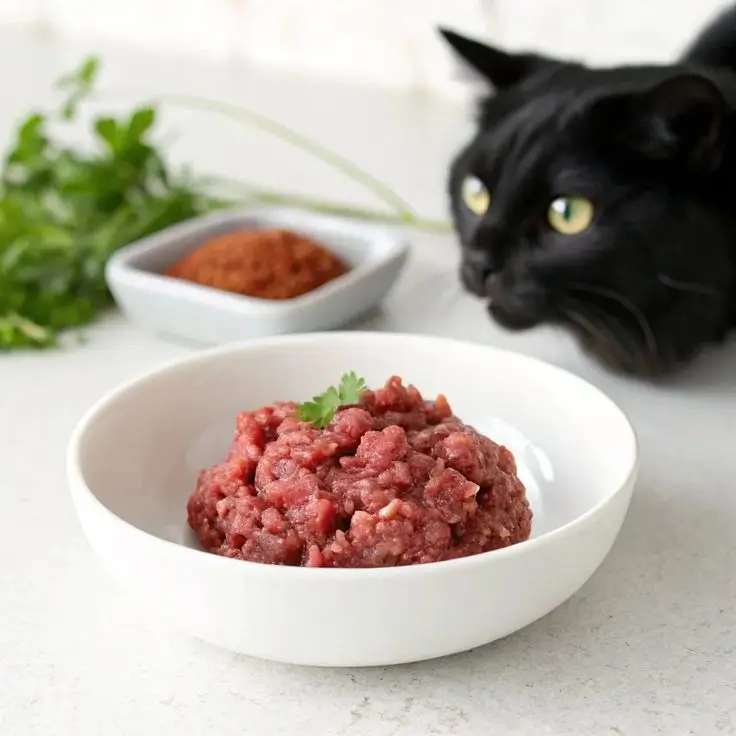
Many cat owners ask, “Can cats eat raw meat?” Since cats are natural carnivores, feeding raw food may seem like a healthy and natural choice. In the wild, cats survive by hunting prey and eating raw animal protein.
But domestic cats are different from wild cats in many ways. While some cats can tolerate raw diets, feeding cats raw meat also comes with serious health and safety risks that many owners do not realize.
So, is raw meat good for cats? The answer depends on how the diet is prepared, balanced, and handled.
Veterinarians often see problems caused by unsafe raw feeding, including bacterial infections, digestive upset, and nutritional deficiencies. Before switching your cat to a raw diet, it’s important to understand both the benefits and the dangers.
Can Cats Eat Raw Meat Safely?
Cats can eat raw meat, but it may expose them to harmful bacteria, parasites, and nutritional imbalances if the diet is not properly prepared.
Raw meat for cats can contain:
- Salmonella
- E. coli
- Listeria
- Parasites
- Harmful pathogens
These bacteria may not only affect your cat but can also spread to humans through food bowls, litter boxes, or contaminated surfaces.
This risk is especially serious for:
- Kittens
- Senior cats
- Pregnant cats
- Cats with weak immune systems
- Homes with children or elderly family members
Why Do Cats Like Raw Meat?
Cats are obligate carnivores, meaning they rely heavily on animal protein for survival. Their bodies are designed to digest meat and absorb nutrients like:
- Taurine
- Amino acids
- Animal fats
- Protein
The smell and texture of raw meat often appeal strongly to cats because it resembles natural prey.
However, just because cats enjoy raw meat does not always mean it is the safest option.
Benefits of Feeding Cats Raw Meat
Some cat owners who support raw feeding claim it offers several benefits.
Possible Benefits of a Raw Diet for Cats
- Shinier coat
- Increased energy
- Smaller stool size
- Better muscle tone
- Higher protein intake
- Improved appetite
Some owners also believe a natural cat diet supports healthier teeth and digestion.
Still, veterinary evidence supporting these claims is limited, and many benefits are based on personal experiences rather than long-term scientific studies.
Risks of Feeding Cats Raw Meat
The risks of feeding cats raw meat are one of the biggest reasons veterinarians remain cautious about raw diets.
Bacterial Infections
Raw meat may carry dangerous bacteria that can cause:
- Vomiting
- Diarrhea
- Fever
- Dehydration
- Severe illness
Nutritional Deficiencies
One of the most common mistakes owners make is feeding only muscle meat.
Cats need balanced nutrition that includes:
- Taurine
- Calcium
- Vitamins
- Minerals
- Organ meat nutrients
Without proper balance, cats may develop:
- Weak bones
- Heart disease
- Vision problems
- Digestive disorders
Parasites
Raw meat can contain parasites that affect both cats and humans.
Food Safety Risks
Improper storage or handling of raw meat increases contamination risk inside the home.
Can Raw Meat Make Cats Sick?
Yes, raw meat can make cats sick, especially if it is contaminated or nutritionally incomplete.
Symptoms of Foodborne Illness in Cats
Watch for these warning signs:
Digestive Symptoms
- Vomiting
- Diarrhea
- Gas
- Loss of appetite
- Weight loss
Severe Symptoms
- Fever
- Bloody stool
- Lethargy
- Weakness
- Dehydration
If symptoms continue longer than 24 hours, contact your veterinarian immediately.
Can Cats Eat Raw Chicken Safely?
“Can cats eat raw chicken?” is one of the most searched raw feeding questions online.
While cats can eat raw chicken, veterinarians warn that it is one of the most common sources of Salmonella contamination.
Risks of Raw Chicken for Cats
- Salmonella infection
- Food poisoning
- Digestive upset
- Parasites
- Nutritional imbalance
A common mistake owners make is feeding plain chicken breast alone. Cats cannot survive on muscle meat only.
Can Cats Eat Raw Beef?
Raw beef is another popular protein choice in homemade raw cat food diets.
Risks of Raw Beef for Cats
- Bacterial contamination
- Parasites
- Digestive upset
- Excess fat intake
Fatty raw beef may trigger stomach issues or pancreatitis in sensitive cats.
Can Indoor Cats Eat Raw Meat?
Some owners assume indoor cats are safer candidates for raw feeding.
However, indoor cats can still develop:
- Bacterial infections
- Nutritional deficiencies
- Digestive problems
Humans in the home may also become exposed to bacteria through contaminated surfaces or litter boxes.
Can Kittens Eat Raw Meat Safely?
Most veterinarians do not recommend raw diets for kittens.
Kittens have developing immune systems and need carefully balanced nutrition for healthy growth.
Why Raw Diets Are Risky for Kittens
Kittens require exact levels of:
- Calcium
- Protein
- Taurine
- Phosphorus
- Vitamins and minerals
Improper feeding during growth stages may lead to lifelong health problems.
Raw Diet for Cats vs Cooked Diet
Many owners wonder whether cats should eat raw or cooked meat.
Raw Diet for Cats
Pros:
- High protein
- Minimal processing
- Appeals to natural instincts
Cons:
- Bacteria risk
- Parasites
- Difficult to balance nutritionally
Cooked Meat for Cats
Pros:
- Safer from bacteria
- Easier digestion
- Lower contamination risk
Cons:
- Some nutrient loss during cooking
Most veterinarians agree that cooked, balanced diets are generally safer than homemade raw diets.
Best Raw Meat for Cats
If owners choose raw feeding, common protein options include:
- Chicken
- Turkey
- Rabbit
- Beef
- Lamb
The best raw meat for cats should come from trusted sources and follow veterinary-approved nutritional guidelines.
Common Raw Feeding Mistakes Cat Owners Make
Feeding Unbalanced Homemade Diets
Random internet recipes often miss essential nutrients.
Ignoring Hygiene
Raw meat preparation requires strict cleaning practices.
Switching Foods Too Quickly
Sudden diet changes can upset a cat’s stomach.
Feeding Cooked Bones
Cooked bones can splinter and become dangerous.
Veterinary Advice on Raw Feeding Cats
Most veterinarians recommend caution with raw feeding.
If owners decide to feed raw meat, experts suggest:
Use Veterinary-Approved Recipes
Balanced nutrition is critical for long-term health.
Follow Food Safety Rules
- Wash bowls daily
- Clean surfaces thoroughly
- Store meat safely
- Wash hands after handling raw food
Schedule Regular Vet Visits
Routine exams and bloodwork help monitor your cat’s health.
Safer Alternatives to Raw Meat for Cats
If you want the benefits of high-protein diets without the risks, consider safer alternatives.
Commercial Balanced Cat Food
Quality wet and dry foods already contain complete nutrition.
Freeze-Dried Raw Diets
These are processed to reduce harmful bacteria while maintaining raw ingredients.
Lightly Cooked Cat Food
Some owners prefer gently cooked homemade meals guided by a veterinary nutritionist.
Frequently Asked Questions
Is raw meat good for cats?
Raw meat may provide high protein, but it also carries bacteria and nutritional risks if not balanced properly.
Can cats eat uncooked meat every day?
Cats can eat uncooked meat daily only if the diet is complete, balanced, and prepared safely.
What is the safest meat for cats?
Cooked, unseasoned chicken or turkey is usually safer than raw meat.
Can raw chicken kill cats?
Severe bacterial infections from contaminated raw chicken can become dangerous, especially for kittens or sick cats.
Do veterinarians recommend raw diets for cats?
Many veterinarians are cautious about raw feeding because of food safety and nutritional concerns.
Final Thoughts
So, can cats eat raw meat? Yes — but that does not automatically make raw feeding the best choice.
Feeding cats raw meat requires careful planning, proper hygiene, and balanced nutrition. Many health problems happen when owners feed incomplete homemade diets or ignore food safety risks.
Before starting a raw diet for cats, speak with your veterinarian or a veterinary nutritionist. A healthy cat diet should always focus on safety, balance, and long-term health rather than feeding trends alone.