
Yes, cats growl—and it’s a clear warning signal. A cat growl is a low, rumbling vocalization that says “Back off.” Cats use it to increase distance from a person, animal, or situation they find threatening, painful, or overwhelming. It commonly appears with other body-language “keep away” signals like hissing, yowling, ears back, dilated pupils, tucked tail, piloerection (fluffed fur), or a low crouch. Recognizing the context is crucial because the right response can prevent bites, scratches, and prolonged stress.
Cat Growling vs. Hissing vs. Yowling
Growl: Low, continuous rumble; distance-increasing warning. Often seen with still, tense posture. Meaning: “Give me space or I may escalate.”
Hiss: Sudden, sharp exhalation; mouth open; often with arched back. Meaning: “I’m scared/defensive—don’t come closer.”
Yowl/Howl: Long, loud vocalization; can indicate conflict, stress, mating, cognitive changes, or pain. Meaning varies by context—check for other signs and age/health.
Comparison Table: Cat Vocal Warnings
| Vocalization | Description | Body Language | Meaning |
|---|---|---|---|
| Growl | Low, rumbling, sustained sound | Still/tensed body, ears back, tail tucked or lashing | Warning: “Give me space or I may escalate” |
| Hiss | Sharp exhalation, mouth open | Arched back, fur fluffed, defensive stance | Defensive fear: “I’m scared, don’t come closer” |
| Yowl/Howl | Long, drawn-out loud sound | Often pacing, restless, or crouched | Conflict, stress, mating, pain, or age-related changes |
Why Do Cats Growl?
- Fear, Stress, or Anxiety
Most cat growling is defensive. New environments, unfamiliar people/animals, loud noises, or handling they don’t consent to can trigger a fear response. Growling aims to increase distance and prevent escalation. Addressing fear/stress reduces growling frequency. - Pain or Medical Problems
Painful cats often guard their bodies and may growl when approached or touched. Common culprits include arthritis, dental disease, trauma, infections, neurological or sensory issues, and illness-related irritability. If growling is new, frequent, or out of character, schedule a veterinary exam first. - Territorial or Social Tension (Cats vs. Cats)
In multi-cat homes, growling often appears in territorial disputes or fear-based stand-offs. It’s common during poor or rushed introductions and around key resources (food, litter, resting spots, windows). Proper management and reintroductions reduce conflict. - Redirected Aggression
A cat aroused by a stimulus it can’t reach (e.g., seeing an outdoor cat through the window) may redirect toward a housemate or human. Growling is a warning in these high-arousal moments. Do not intervene physically; instead, calmly separate, allow a cool-down, and later implement desensitization. - Maternal Protection
Queens with kittens may growl, hiss, or swat to guard their litter from cats (and sometimes people) they otherwise tolerate. This usually fades after weaning—but avoid stressors and provide quiet nesting space. - Overstimulation / Petting-Induced Aggression
Some cats enjoy brief touch only. Subtle cues (tail flicks, skin ripples, ears rotating) can precede a warning growl—respect it by pausing interaction and letting the cat choose contact.
Cat Growling While Eating
If your cat growls while eating, it often signals food guarding—a natural instinct to protect resources. This is especially common in multi-cat homes, rescue cats, or kittens who experienced food scarcity. To reduce food-related growling:
- Feed cats separately in quiet areas.
- Offer multiple food and water stations.
- Avoid hovering near your cat’s bowl, as they may perceive you as competition.
Persistent or sudden food aggression should be discussed with your vet to rule out pain (e.g., dental disease) or anxiety disorders.
Cat Growling at Owner
Sometimes cats growl at their own humans. This usually happens if:
- You’ve touched a painful area.
- They’re overstimulated from petting.
- They feel cornered or startled.
- They associate you with a negative experience (e.g., meds, carrier).
If your cat growls at you, stop interacting immediately, give them space, and reassess the context. Punishment will only damage trust—use calm behavior, positive associations, and let them choose contact.
Cat Growling at Nothing
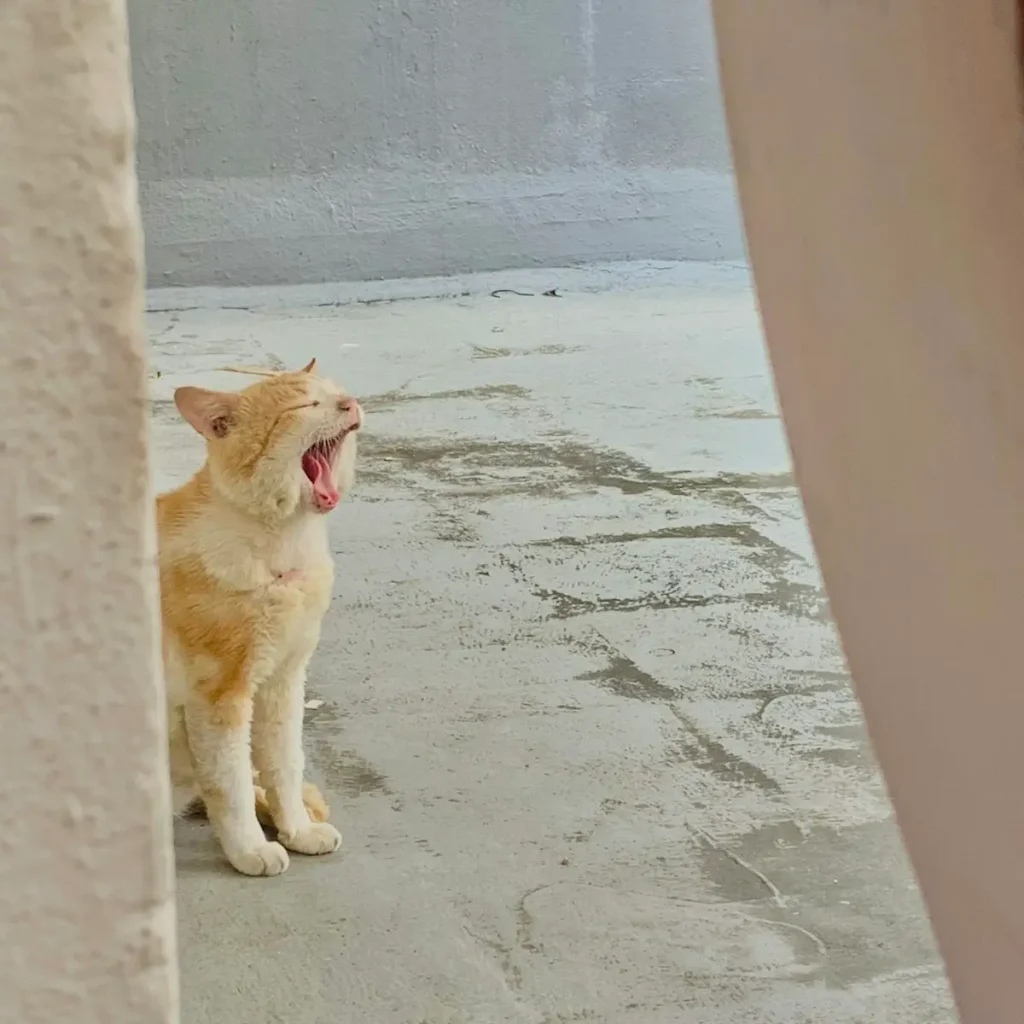
Owners sometimes report cats growling “at nothing.” In reality, cats perceive stimuli we don’t notice—distant noises, outdoor animals, or even changes in household scent. In older cats, growling at nothing can also indicate cognitive decline or sensory changes (vision/hearing loss). If it’s frequent or unexplained, a vet exam is recommended.
Kitten Growling
Kittens can growl too, often during play or over food. It’s usually less serious than adult growling and part of learning boundaries. However, consistent growling at handling or littermates may signal fear or early resource guarding. Provide gentle handling, socialization, and plenty of resources to reduce competitive behaviors.
Cat Growling but Purring
Rarely, a cat may purr and growl at the same time. This contradictory behavior can occur in overstimulated cats—purring reflects self-soothing, while growling warns others to back off. If this happens during petting, stop interaction and let your cat cool down.
Cat Body Language That Often Accompanies Growling
Look for clusters of signals rather than a single sign: ears flattened, pupils dilated or very constricted, tail tucked or lashing, stiff or crouched posture, fur standing on end, sidelong stance to appear larger. These are classic “keep away” cues that often ride with a growl/hiss/yowl.
What To Do When Your Cat Growls (Step-by-Step)
- Stop. Freeze. Give space. Don’t reach, stare, or hover. Back away slowly and lower your body posture if you’re close.
- Let them choose distance. Open a path to a safe room, high perch, or hiding spot.
- Reduce triggers. Turn off the vacuum, close curtains on the stray-cat window, separate housemates, pause petting.
- Don’t punish. Scolding increases fear and can intensify aggression.
- Track patterns. Note time, place, people/animals present, handling type—this guides training or vet assessment.
- If cat-cat flare-up: Separate to cool down, then use slow reintroduction with scent swapping, visual barriers, and gradual exposure.
Long-Term Fixes: How to Reduce Cat Growling for Good
Veterinary First
New or escalating growling = vet check. Rule out pain (e.g., dental disease, arthritis) and medical drivers before behavior work.
Optimize the Environment (Resource Security)
- 1 litter box per cat +1.
- Multiple feeding/water stations.
- Several resting and high-perch options per room.
- Predictable routines and quiet retreats.
Meet Behavioral Needs Daily
- Interactive play (wand toys) to burn predatory energy.
- Puzzle feeders, scratching posts, window views.
- “Hunt → eat → rest” routines reduce frustration.
Evidence-Based Behavior Plans
For fear/territorial issues, use desensitization & counterconditioning (DS/CC): pair the trigger at threshold with high-value rewards, gradually decreasing distance. For multi-cat homes, follow structured reintroduction plans. Consult your vet for a referral to a feline behaviorist if needed.
When To See the Vet Urgently
- Sudden onset growling in a normally easygoing cat.
- Growling with lameness, drooling, weight loss, or appetite changes.
- Older cats with new vocal changes (possible cognitive decline).
- Any bite or deep scratch incident.
Special Situations
Multi-Cat Households
Expect occasional grumbles during status negotiations, but repeated growling, blocking, or chasing across resources indicates social stress. Install more litter, food, resting spots and pause free interactions to work a reintroduction plan.
Outdoor/Stray Cats at the Window
Classic redirected trigger. Block the view (frosted film/curtains), use white noise, and desensitize gradually to sight/scent of outdoor cats if unavoidable.
Queens with Kittens
Respect protective signaling. Restrict visitors/pets, keep the nest quiet, and give generous resources away from household traffic until weaning.
FAQs
Why is my cat growling all of a sudden?
Sudden growling often points to pain/illness, fear, or a specific trigger. Start with a vet exam to rule out medical causes.
Is a cat growling the same as hissing?
Both are distance-increasing warnings. Growls are low and sustained; hisses are sharp expulsions of air—both signal “back off.”
Why do cats growl when playing or being petted?
Some cats become overstimulated. Subtle cues (tail flicks, skin ripples) may precede a growl. Stop interaction and give space.
Why does my cat growl at other cats?
Common causes: territorial tension, fear, or resource guarding. Use slow introductions and ensure abundant, separated resources.